
The appeal of a throttle-based electric bike is hard to deny; it’s a pure experience akin to riding a motorcycle and doesn't require registration or a license. But nearing 2025, the big question remains: is it legal to ride an e-bike without pedaling? Here’s the not-so-simple yes and no. Instead, it turns on a convoluted tangle of classifications, local statutes, and mutating rules. This guide will help steer you to the vital dimensions you need in order to identify your bike, before you twist that throttle.
The Three-Class System: The Legal Foundation
The legal foundation for e-bikes in the United States — and increasingly other places — is based on a three-class system. It’s this framework that, more than anything else, determines whether your throttle-equipped ride is a bike or an illegal motor vehicle. No matter how slowly the wheels turn, being sure of which class your e-bike fits is a legal necessity by 2025. (A throttle-only e-bicycle would be nearly always unclassified.) If it’s too powerful or moves faster than that, you might be in moped or motorcycle territory — subject to entirely different laws. Manufacturers usually have to put a tag on the bike that declares what it is.
Class 1 E-Bike:
This category offers assistance only while you are pedaling (pedal-assist) and ceases assisting when the bike hits 20 mph. There’s no throttle on these e-bikes. They are usually allowed in places where regular bikes are permitted.
Class 2 E-Bike:
This is the main category for throttle lovers. Remember, a Class 2 e-bike comes with a throttle that you can use to get the bike moving at up to 20 mph without pedaling. It also provides pedal-assist assistance up to 20 miles per hour. This is the legal definition of an e-bike if it has a throttle, but is still considered a bike.
Class 3 E-Bike:
These are the speediest of “bicycles,” offering pedal-assist up to 28 mph. Guidelines for the states can be written to exclude it if regulators wish, as is already the case in some local laws. They tend to be even more restricted, especially on multi-use paths.
Out-of-Class Doctrine:
Any e-bike with an electric motor over 750W or a throttle-powered top speed beyond 20 mph is commonly considered not to be a legal e-bike. Most of the time, these are considered motor vehicles and subject to licensing, registration, and insurance requirements.
State and Local Laws: A Patchwork of Regulations
So the federal class system is a starting point, but for legality, the real response lies in what state and local jurisdictions are willing to accept. When we look out to 2025, this patchwork of regulation is growing clearer, but also more complicated. What is completely legal on a city street in one state may be outlawed on a bike path in another. Riders must turn into researchers of the land to avoid fines and ride in approved areas. Focusing on these regional differences is the quickest way to transform a fun ride into a legal headache.
State-Level Legislation:
Several states have implemented a system with three classes, but where each of those can go is governed by individual rules. For instance, in some states, Class 2 e-bikes are prohibited from some types of trails or certain kinds of bike lanes in places where Class 1 is permitted.
City and Municipal Ordinances:
Many major city and town municipalities have their own e-bike rules which in some cases go beyond state law. This might be lower speed limits or certain helmet requirements or even a full ban on e-bikes in pedestrian hotspots like boardwalks or town squares.
Park and Trail Management:
This is the level of rules most likely to be granular. National parks, state parks, and local conservation areas all have their own guidelines. One trail could be assigned to non-motorized use, which frequently precludes all e-bikes or might restrict to Class 1 e-bikes.
Next Steps for Compliance:
- Go to the Source: Always check the website for the specific park, trail system, or city you plan to visit before riding.
- Read Signage: Signs at trailheads and park entrances will likely tell you what is and isn’t allowed for that type of vehicle.
- Go Online: Websites like PeopleForBikes have created databases of e-bike laws by state that can offer a good place to start when you are looking for information.

The ENGWE M20: Power and Freedom

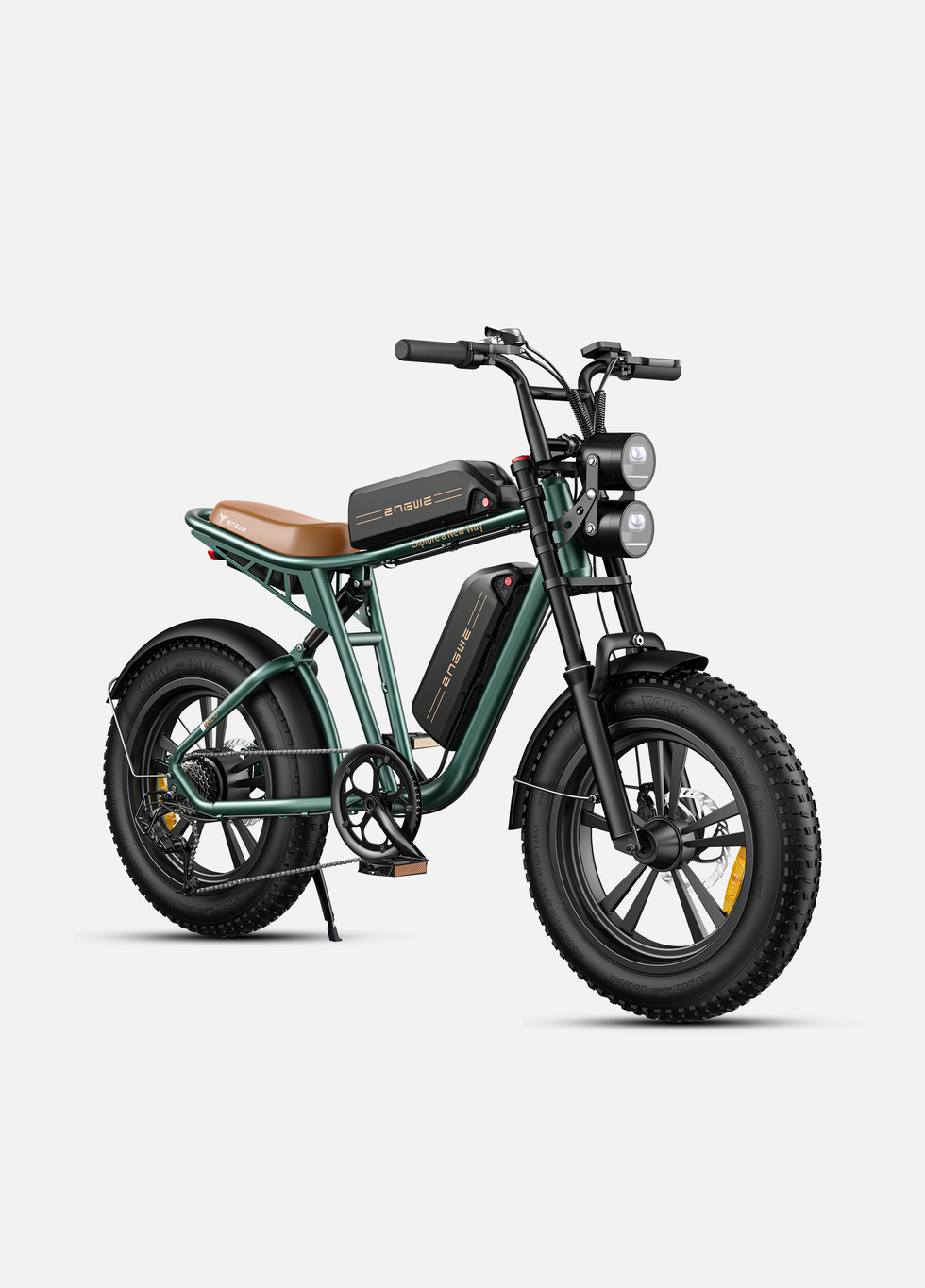
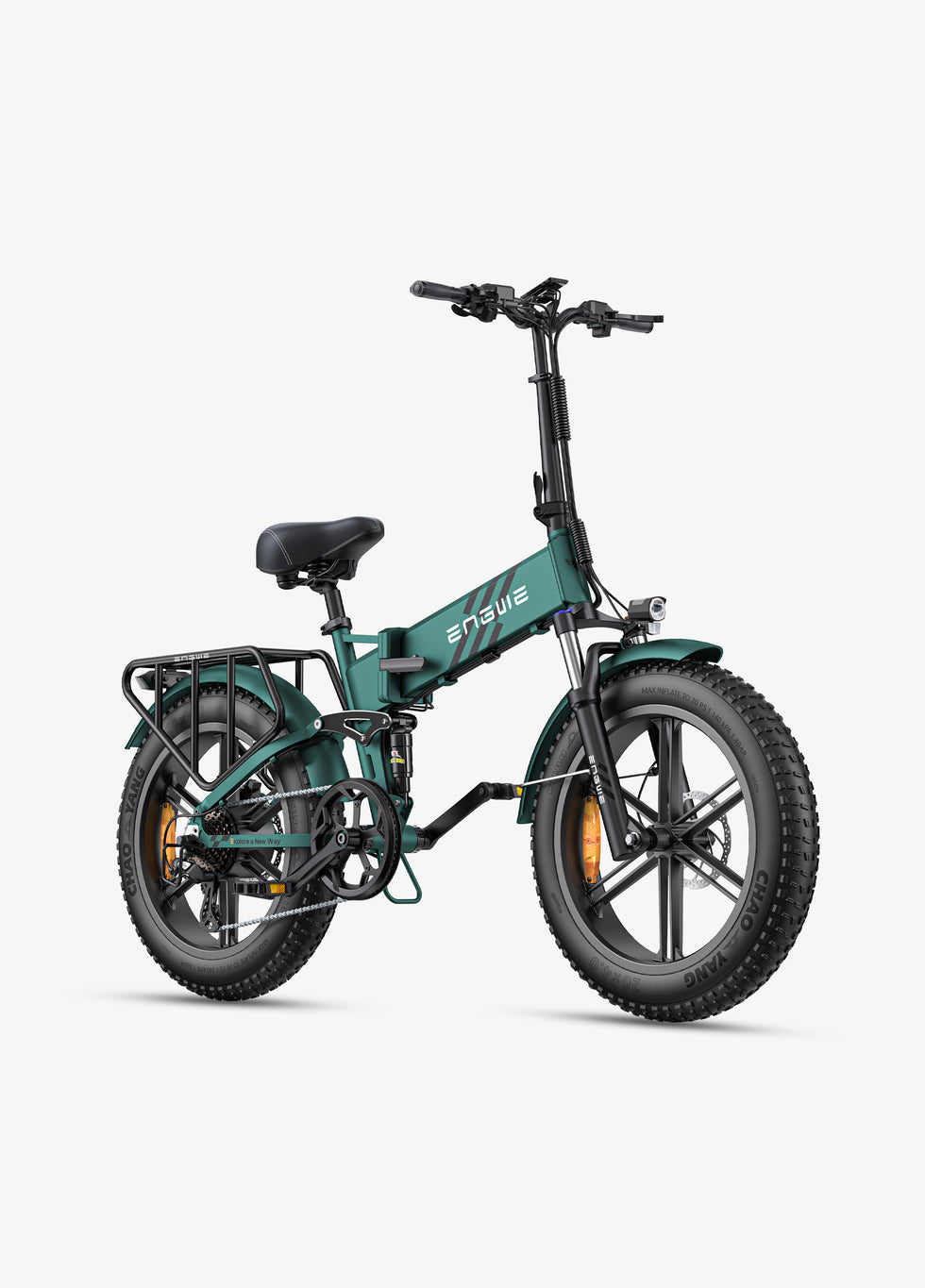
If you are looking for the ultimate in throttle-assisted liberty and exploration – the ENGWE M20 is for you. ENGWE has developed one of the sturdiest and most powerful e-bikes on the market that also presents itself as a motorcycle. The style of the bike isn't just for looks though; it's carefully engineered to aid your performance on any trail. The M20 is the epitome of what a rider needs to have in a throttle-equipped vehicle: Power, range, and reliability. The solid construction and handling characteristics mean that it is equally at home on normal roads as off. The quality of the brand makes sure that you are not sacrificing durability for an enjoyable but safe riding experience.

- Great Comfort: The M20 contains a dual suspension system, which consists of a front hydraulic shock and rear spring shock absorber. This delivers twice the shock absorption of normal e-bikes, ensuring riders stay in control and comfortable over any terrain.
- Slay the Range Anxiety: Thanks to its extra-large 48V 26Ah dual-battery configuration, the M20 sports an amazing maximum range of 75km+75km in pedal-assist mode, allowing you to discover more than ever without worrying about your next charge.
- All-Terrain Domination: 20x4.0 inch triple-layer fat tires. These give you great traction on sand, snow, gravel, and pavement and ensure a smooth and safe ride.
- Dependable Stopping: Safety is top priority, so the M20 comes with front and rear 160mm mechanical disc brakes for reliable stopping power in all conditions.
| Feature | Specification |
|---|---|
| Motor Type | Brushless motor |
| Max Torque | 55 N.m |
| Battery Type | 48V 13Ah Single / 48V 26Ah Dual |
| Suspension System | Front Hydraulic Shock & Rear Air Shock Absorber |
| Tires | 20" x 4.0" Triple Layer Fat Tires |
| Drivetrain | 7 Gears Shimano |
Practical Considerations: Insurance, Safety, and Reclassification
As the e-bike market deepens, so will the focus on safety, insurance, and what is considered a bicycle versus a motor vehicle. For 2025, here are these practical issues riders of throttle-only e-bikes need to know. Because they are heavy machines, liability can be an issue in the case of an accident. E-bikes may not be covered under standard homeowner or renter policies, particularly those that are more powerful. Never assume you will automatically be covered. In addition, the increase in the number of battery fires is resulting in new safety guidelines that will be important, especially for insurance purposes and maybe even by law in some cities.
Insurance Knowledge:
- Check Your Current Policy: Call your home or renter’s insurance company and inquire about coverage, being sure to ask if your e-bike is covered in the event of theft and liability. Do not assume it is.
- Look Into Specialized E-Bike Insurance: Policies tailored to e-bikes are now available, and they cover theft, damage, or personal liability. It is a small price to pay for peace of mind.
Safety Certifications:
- Check for UL 2849: This is a certification from Underwriters Laboratories that tests the entire e-bike electrical system to make sure it’s safe, including the battery, charger, and controller. The best way to secure electrical safety and reduce fire risk is to buy a bike that has been certified for compliance with UL’s standard by a qualified testing organization.
Avoiding Reclassification:
- Don’t Exceed Power Limits: Make sure your e-bike has a 750W or less motor.
- Observe Speed Limits: Don’t trick out your bike to go faster than the 20 mph throttle or 28 mph pedal-assist limits for Class 2 and Class 3 designations, respectively.
- No VIN: A strong signal that it’s a bicycle is not having any kind of Vehicle Identification Number (VIN). Every MEV shall be titled and registered in accordance with N.J.S.A.39:3-4.

The Future: Legislation and Responsible Riding
Ahead of 2025 and beyond, what will the legal situation look like for throttle-only e-bikes? Responsible riding and tech innovation will determine the future of e-bike access. With more e-bikes hitting the roads and trails, riders will have to serve as ambassadors for the community. Racing through crowded pedestrian thoroughfares or modifying bicycles for illegal levels of power only adds to the case, now being raised worldwide, that tighter regulation and an outright ban are needed. By contrast, by modeling responsible and respectful riding practices, the e-bike community can contribute to access that is promoted rather than curtailed. Being informed about new laws and working to educate others in power on better policy is crucial.
What to Watch for in Future Legislation:
- Stricter enforcement: Police departments will likely become more educated on e-bike classes and enforce speed and power limits more strictly.
- Compulsory Certifications: An e-bike may be legally compelled to comply with safety regulations, such as UL 2849, in order to be sold or used within the area.
- Dynamic Trail Access Rules: The debate over who should get access to the trail will be a continuing, heated one with policy changes and arguments based on usage, environmental impacts, and user conflicts.
Responsible Riding Tips:
- Control Your Speed: Always travel at a safe speed, especially when around pedestrians, pets, and other cyclists.
- Check and Signal: Make sure anything you plan to do, such as turning left or right, is signaled well in advance.
- Speak Up: Let folks know you’re there, whether with a bell or simply saying “on your left” as you pass.
- Yield Appropriately: On shared trails, e-bike riders yield to pedestrians and equestrians.
Can I ride a throttle-enabled Class 2 e-bike anywhere?
No. While legally acceptable on a wide variety of roads, legality is highly variable on bike paths, multi-use trails, and in parks. Always check local regulations before riding.
Is it legal for me to increase the speed of my e-bike?
Modifying your e-bike to exceed speed limits for its class can place that bike within an illegal category of vehicle and void your warranty, not to mention subject you to driving-related requirements such as a license, registration, and insurance.
Choosing a Class 2 e-bike (under 750w, max speed on throttle to 20mph) is key, and check whether the brand you are buying is legal under your state or local city regulations.
Common sense and keeping up to date on the relevant news are the best tools in your toolbox to help keep you enjoying all of your open-road fun.