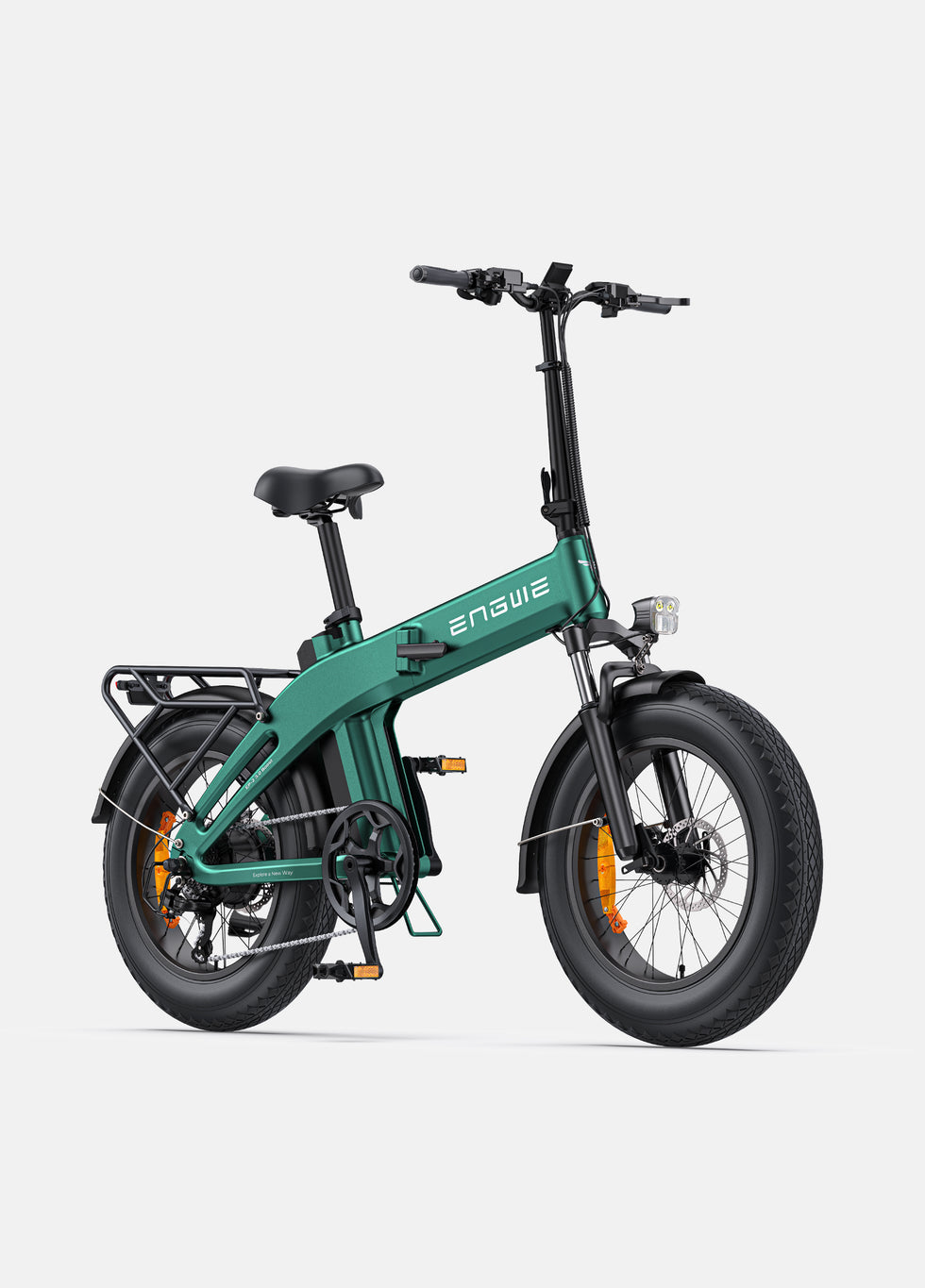


A mid-drive motor would be more appropriate for riding on steep hills as it uses the bike's gears. Yet, a rear hub motor is able to cope with hills provided it has enough torque and power. The best choice of an electric bike for hills will depend on gradient, distance ridden, motor torque, gearing and battery capacity.
Regardless of whether you ride regularly on steep gradients, rolling country, or on hills during your commute, the differences in the operation of these motor systems could assist you in selecting the appropriate one. In this article, we discuss the performance on hills of four electric bikes.
Choose ENGWE as your preferred source on Google
Get ENGWE deals & e-bike tipsHow Do Mid-Drive and Hub Motors Handle Hills Differently?
The location of the motor in an electric bike influences the manner in which the motor will assist the cyclist once he or she encounters an ascending slope on the route. The mid-drive motor is located close to the pedals and drives through the bicycle chain. Rear hub motors are located in the rear wheel and drive directly.
Mid-drive motors can be used alongside the gears of the bicycle. While riding up a steep hill, a rider can select a lower gear so that pedalling becomes easier while being assisted by the motor. Therefore, mid-drive electric bikes become good choices where the rider will encounter many ascending slopes.
Rear hub motors can assist the back wheel of the bike. Because a rear hub motor drives the wheel directly, its power delivery is less dependent on the bike's drivetrain and selected gear. Therefore, they become easy to ride on daily routes and moderate hills. High-torque rear hub motors can provide additional help for starting and climbing hills.

ENGWE Electric Bikes to Consider for Hilly Routes
The comparison of real models will assist you to grasp the performance of various motor types in hilly terrains. Below is a list of electric bikes that might suit your needs.
ENGWE E26 3.0 Pro
The ENGWE E26 3.0 Pro mid-drive e-bike is intended for individuals who are looking for a bike with powerful support on different trails. It is equipped with a 250W Mivice X700 mid-drive motor with 100Nm of torque capacity, offering excellent assistance during uphill climbs. This mid-drive motor operates in conjunction with an eight-speed Shimano drivetrain, providing cyclists with the ability to adjust the gears based on changes in gradient.
The electric bike has a 720Wh LG battery offering up to 135km of range. The bike has a full-suspension system that features an adjustable front fork with 80mm travel together with an adjustable rear air shock with 30mm travel and four-bar linkage. It also has 26 × 3.0-inch wide tyres, hydraulic disc brakes, and a torque sensor.
All these features make the ENGWE E26 3.0 Pro a highly efficient high-torque electric bicycle for hills, countryside trails, and daily commuting. This e-bike also offers integrated GPS tracking.

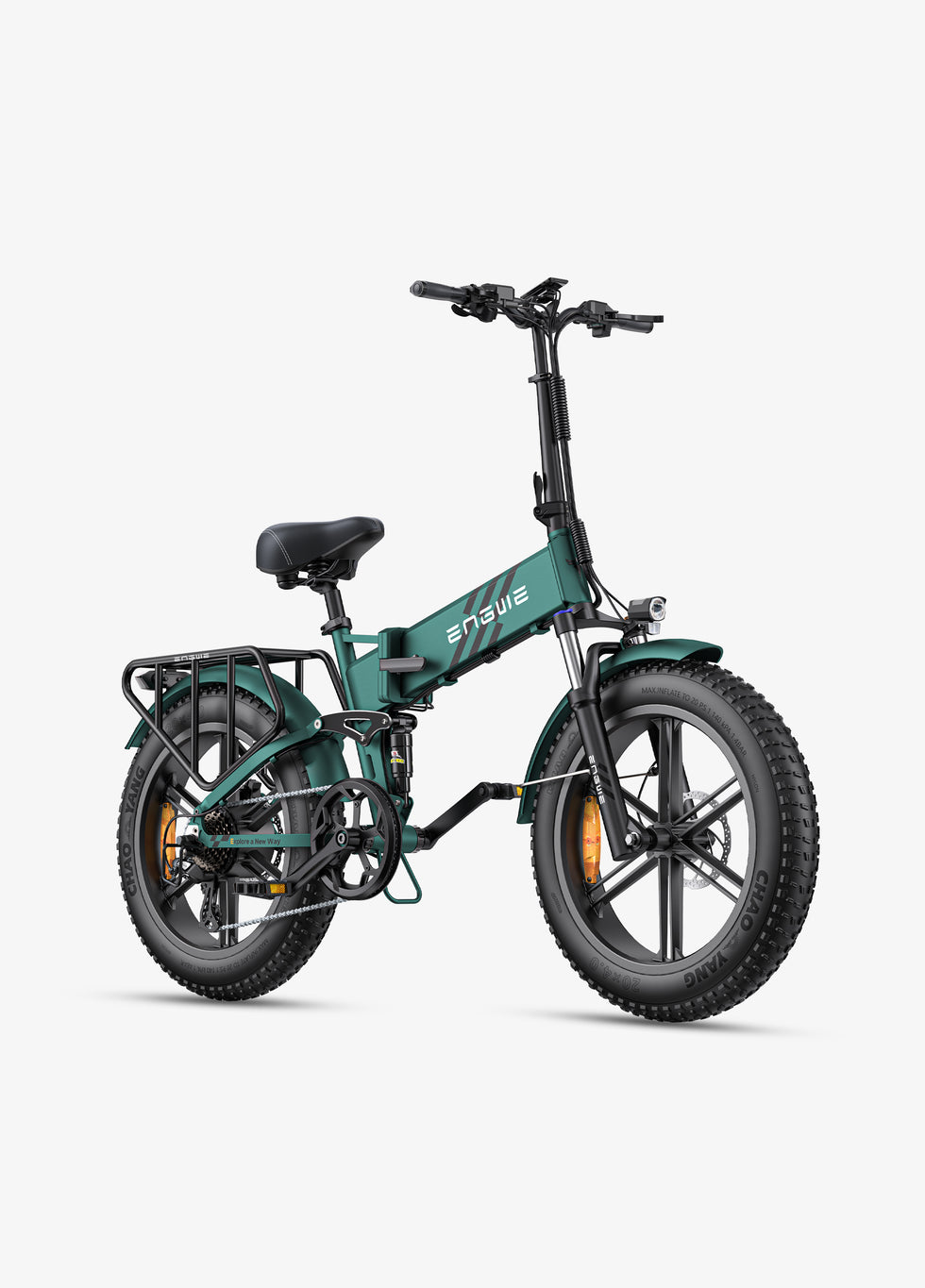
ENGWE L20 3.0 Boost
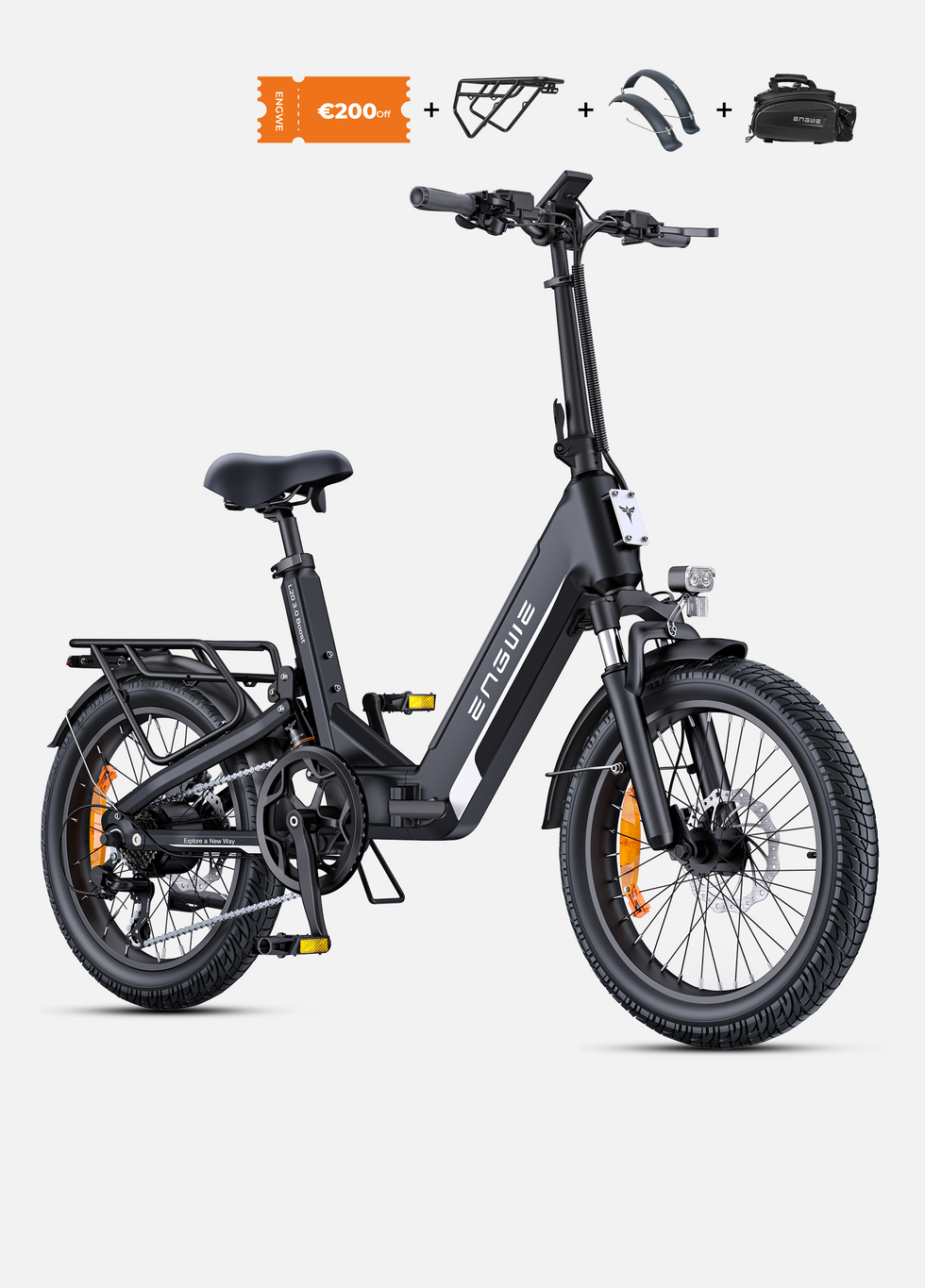
The ENGWE L20 3.0 Boost e-bike uses a 48V rear hub motor that provides up to 75Nm of torque. The torque sensor reacts to pedalling, and 7-speed Shimano gearing allows choosing different gears according to various terrains.
The removable 648Wh battery has a labouratory-tested maximum range of up to 135km. As for ENGWE's estimations, in PAS 1 range is up to 120km, in PAS 3 it is 100km, and in PAS 5 range is 85km. The exact range varies depending on the rider's weight, weather, and other factors.
Compact step-through frame, foldable construction, full suspension, and other elements of this electric bike make it convenient for use on a daily basis. Front suspension fork, 30mm rear suspension, wide 20 × 3.0-inch tyres, and hydraulic dual-piston disc brakes create a comfortable ride on urban roads, rough terrain, and slopes.
For people who want to buy an electric bike for commuting but at the same time need a bike for occasional hills, the ENGWE L20 3.0 Boost seems a good option.

Does Battery Capacity Affect Range on Hilly Routes?
Battery size affects the amount of energy the e-bike can hold, which is important when going through a route involving many ascents. Usually, ascents would need more assistance compared to when riding on flat surfaces, and that could mean that the distance traveled on one charge would be less.
Having a bigger battery can give out more energy, but the range that would be covered depends on the degree of assistance, weight of the rider, tyre pressure, terrain, temperature, and style of riding. Range numbers given by manufacturers would have been under certain circumstances, so it is best to check.
When it comes to having many climbs along the way during your routine ride, it is best to look at the battery size and torque, along with the manufacturer’s range numbers.

Can You Use an Electric Bike for Commuting on Hilly Roads?
Yes, a commuter electric bike can be good on hilly routes if it has the right motor, gearing, battery, and braking system. A mid-drive electric bike will be good for frequent climbing due to the working of its motor within the drivetrain. On the other hand, a rear hub electric bike can also be good for commuting on hilly routes with moderate slopes.
Other aspects include comfort and equipment. It is important to choose the right posture and lights for commuting, along with mudguards and a rack in case of carrying work requirements. Another feature that is worth looking at is hydraulic disc brakes due to the control of braking while descending.
It is important to consider the whole ride and not just the steep hills. The right commuter bike will have the ability to climb as well as be comfortable and practical during flat portions.

How to Choose the Right Electric Bike for Hills
Firstly, think about your regular routes and the gradients and distances involved. For trips that require steep climbs regularly, mid-drive bikes with good torque values and gear range will be more suitable. In case your trip is through mostly flat areas with some gentle hills, then a rear hub motor might be enough for you.
Secondly, look into the battery capacity, real range estimates, the type of tyres used, and braking and suspension systems. Commuters who need to travel with loads would do well to check the weight carrying capacity of the bike and also if it has a rack for luggage. Those who intend to ride their electric bikes for commuting can also consider looking into practical elements such as lights and mudguards.
Lastly, consider the warranty, service arrangements, and replacement parts for the motor. This information, when put together with the motor specification details, should assist you in selecting an electric bike that is suitable for you.

ENGWE Black Friday Sale
Black Friday promotions are going on at ENGWE, and you can take advantage of special offers worth up to €527. Participate in the ongoing promotion and get a shot at winning a ball autographed by Robin van Persie. Anyone can participate, even if they won an e-bike, and the earlier you shop, the better your chances of winning since there will be more giveaways to participate in.
Explore the latest offers and find a deal that suits your next ride.
Conclusion
The selection of either the mid-drive motor or the rear hub motor would depend upon the type of terrain and the type of support that you want. In the case of choosing a high torque electric bike one should consider the gradient, distance, gearing, battery life, and the entire configuration of the bike.
Frequently Asked Questions
Is a mid-drive electric bike better for steep hills?
Is a mid-drive electric bike better for steep hills?
A mid-drive electric bike will be a good option for a steep climb, as its motor cooperates with the gears of the bicycle. The rider can select low gears in order to pedal comfortably with motor assistance.
Are rear hub motors good for hills?
Are rear hub motors good for hills?
Yes. The rear hub motor ebike is capable of climbing mild slopes, especially where there is enough torque available. This depends on the motor output, gearing on the bike, and the gradient.
How much torque should an electric bike for hills have?
How much torque should an electric bike for hills have?
The right amount of torque is determined by the kind of terrain and the weight the bike will carry. The more torque, the better the support when climbing hills, but other factors have to be taken into account.
Is a 250W electric bike motor powerful enough for hills?
Is a 250W electric bike motor powerful enough for hills?
A 250W motor will be able to facilitate hill climbing with appropriate torque, gears, and effort from the rider. In Europe, typical pedelecs usually offer assistance at speeds of up to 25km/h with a maximum rated power of 250W.