

Choosing the right e cycle for adults depends partly on the terrain you ride. Front-suspension e-bikes feature a suspension fork at the front, while full-suspension models also include a rear shock. Front suspension is often enough for city commuting and light gravel, while full suspension offers additional impact absorption and control on rougher trails. This guide compares both setups and three electric bikes to help you find the right option for your riding needs.
Choose ENGWE as your preferred source on Google
Get ENGWE deals & e-bike tipsWhat Are Front and Full Suspension on an Electric Bike?
Front suspension uses a suspension fork at the front wheel to absorb some impacts from uneven surfaces. A full-suspension e-bike combines a front fork with a rear shock, helping absorb impacts at both ends of the bike. Full-suspension models are also known as dual-suspension e-bikes.
The right setup depends on where you ride. A front fork can add comfort on pothole-marked streets and light gravel, while a rear shock can offer additional support and wheel control on rougher trails. Suspension performance also depends on fork and shock design, travel, setup, tyres, and rider weight.

Full Suspension vs Front Suspension: What Is the Difference?
What makes these bikes different is the location of the suspension system. In the case of front-suspension bikes, there is a suspension fork installed on the bike, whereas full-suspension bikes have both the front and rear shock absorbers.
|
Feature |
Front suspension |
Full suspension |
|
Suspension position |
Front fork |
Front fork and rear shock |
|
Impact absorption |
Mainly front wheel |
Front and rear wheels |
|
Riding comfort |
Suitable for smoother roads and light gravel |
Better suited to rougher surfaces |
|
Bike design |
Generally simpler |
More complex |
|
Best suited for |
Commuting and everyday riding |
Mixed terrain and rougher routes |
A front-suspension e-bike is often a practical choice for commuting on paved roads, cycle paths, and occasional light gravel. Full suspension is more relevant if your regular routes include rough tracks, rocky trails, or repeated impacts. It adds comfort and control in those conditions, but also increases weight, complexity, and maintenance needs.

Three ENGWE e-bikes with Different Suspension Setups
The three models below show how suspension setups vary across everyday, mixed-terrain, and off-road e-bikes. Some use a front fork only, while others combine front and rear suspension. Compare the setup with your regular routes rather than assuming that more suspension is always better..
ENGWE E26 3.0 Pro
The ENGWE E26 3.0 Pro is a full-suspension e-bike designed for mixed and uneven terrain. It features an adjustable 80 mm front suspension fork and a 30 mm adjustable air rear shock with a four-bar linkage design. Together, these components help absorb impacts from rough surfaces.
It uses the 250W Mivice X700 mid-drive motor producing 100 Nm of torque coupled with the 720Wh LG battery. Other parts of the bike include a torque sensor, a Shimano eight-speed drivetrain, and 26 x 3.0-inch all-road tyres. Having a range of up to 135 km, the ENGWE E26 3.0 Pro can be one of your options when you want an all terrain electric bike suitable for paved roads, gravel, and countryside rides.

ENGWE O20 Boost
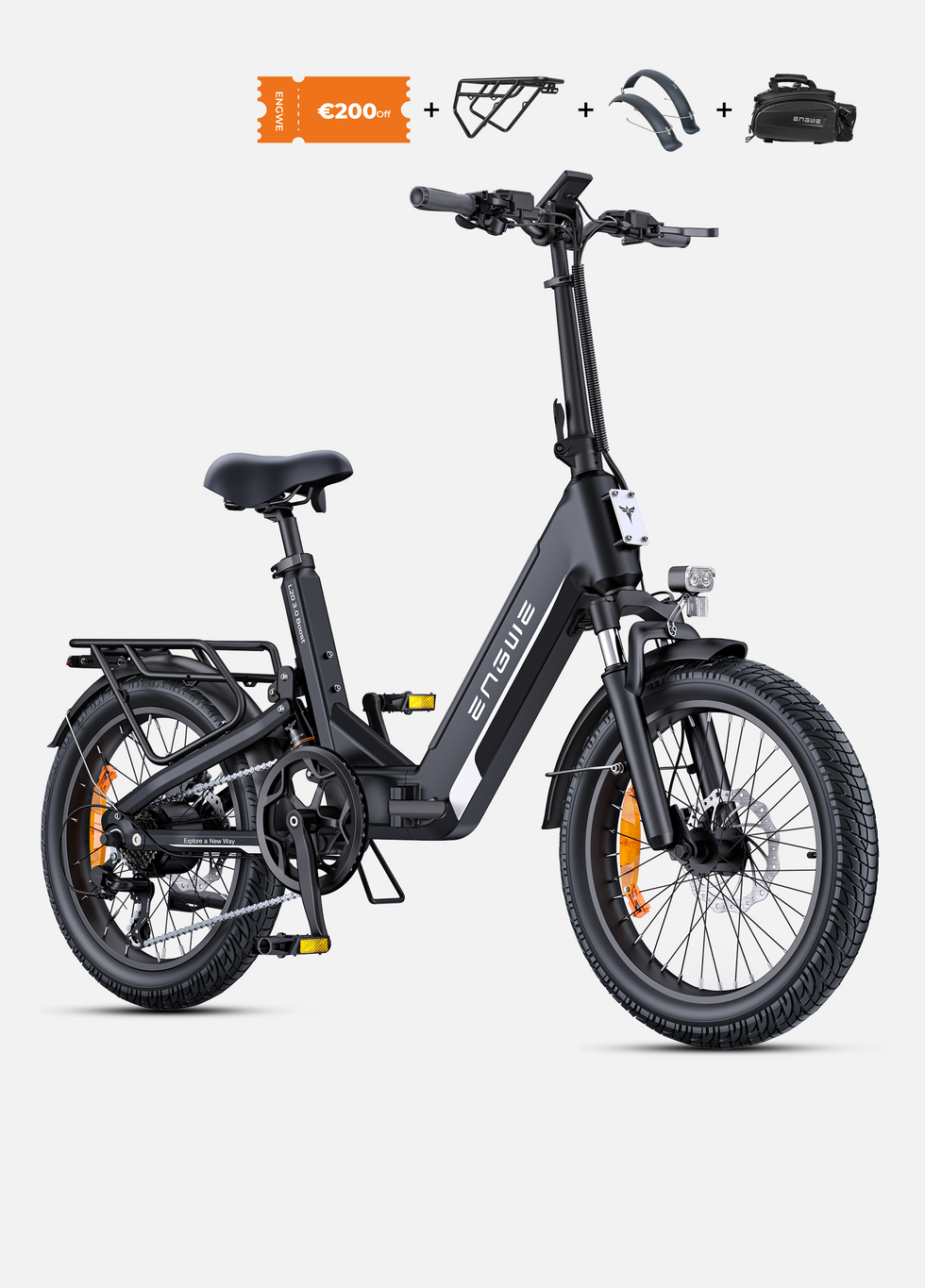
The ENGWE O20 Boost uses a front suspension fork rather than a full-suspension setup. Its hydraulic fork offers 50 mm of travel, helping absorb impacts from uneven roads and light gravel. It is a practical option for riders who want additional front-end comfort without the extra weight and complexity of rear suspension.
This foldable electric bike comes with a 250W hub motor with a torque of 75Nm, a 720Wh LG battery, and a torque sensor. It has a compact frame, making its storage and transportation easy, and the hydraulic disc brakes along with the Shimano eight-speed drivetrain make it a good bike for everyday riding.

ENGWE Engine Pro 3.0 Boost
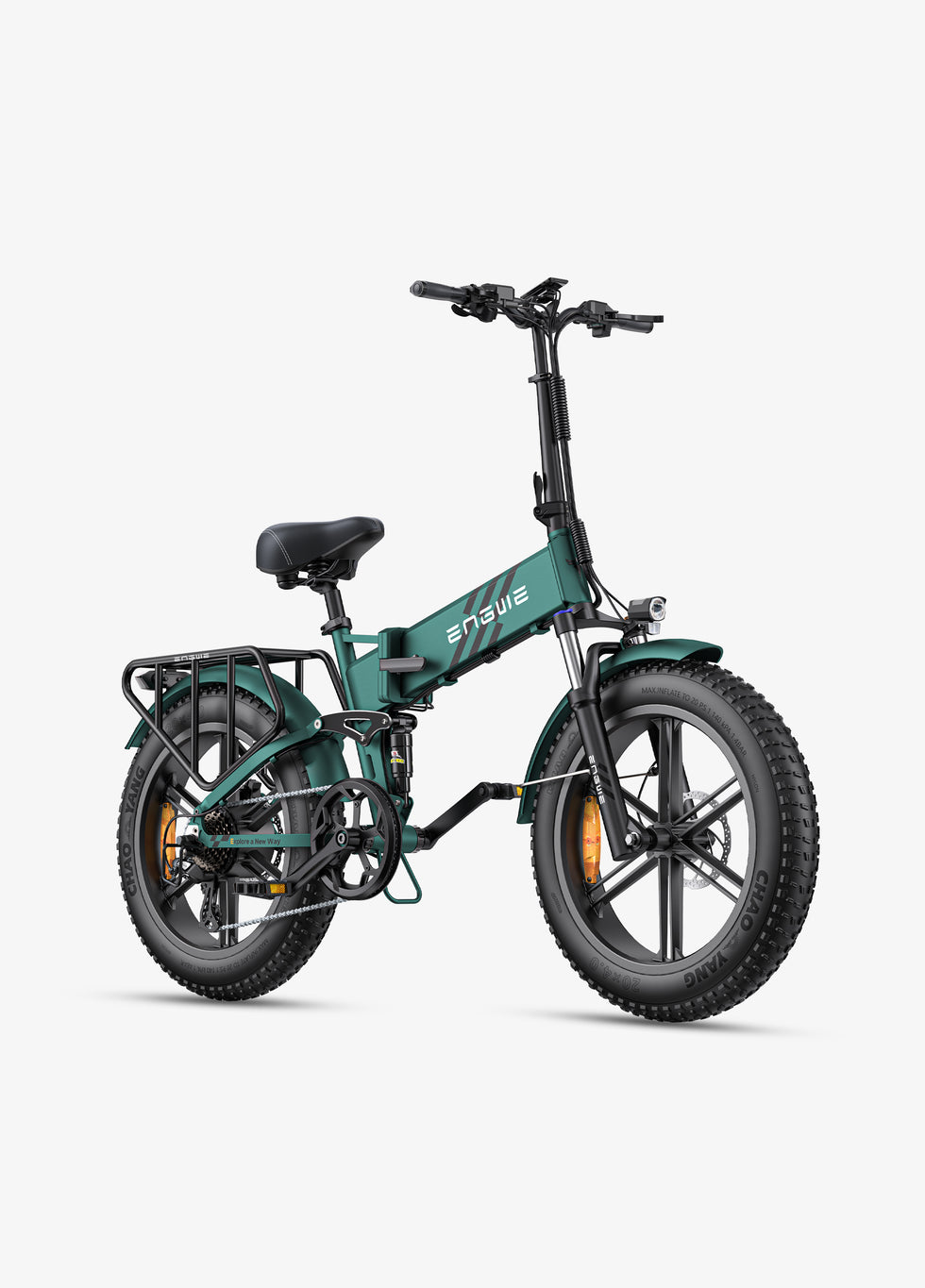
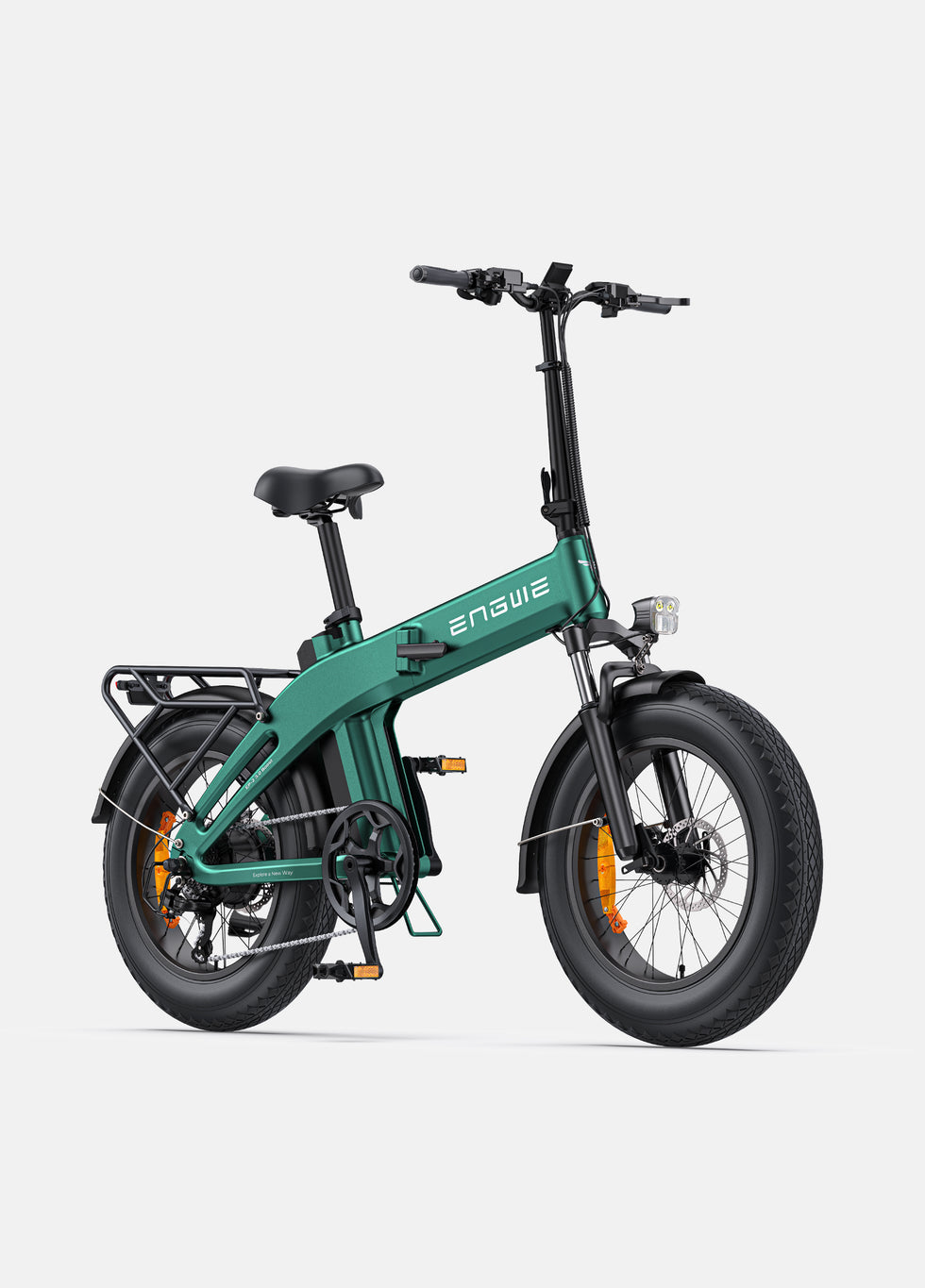
The ENGWE Engine Pro 3.0 Boost offers a folding frame design with a full suspension system. It is characterized by having a hydraulic fork with 50mm travel and rear suspension with 62mm of travel. These ensure that the bike can cushion the impact from both the wheels, and with its 20 × 4.0 inch urban hybrid tyres, the contact area is wide.
It features a 48V hub motor, which generates 90Nm of torque, and a 720 Wh battery. Other specs of the bike include a torque sensor, a hydraulic dual-piston brake system, and a Shimano 7-speed drivetrain. The advertised range of the bike differs depending on the level of assistance, but it can achieve up to 130 km of range in PAS 1 mode. The ENGWE Engine Pro 3.0 Boost is an option for riders who want a folding full-suspension e-bike with wide tyres and front and rear suspension

How to Choose the Right Electric Bike with Suspension
When choosing between front and full suspension, start with your regular routes. A front-suspension e-bike is often sufficient for paved roads, urban commuting, cycle paths, and occasional light gravel. If you regularly ride rough tracks or trails, a full-suspension setup can provide additional impact absorption and help keep both wheels in contact with uneven ground.
Also consider suspension travel, bike weight, tyre width and pressure, riding position, saddle comfort, maintenance, and battery range. Full suspension adds components and can increase weight and maintenance needs, so it may not be worthwhile if most of your rides are on smooth roads. Choose the setup that matches your terrain and riding frequency.

ENGWE Black Friday Sale
The Black Friday Sale of ENGWE has commenced, providing customers with special offers to save up to €527 in total. Participate in the promotion to have an opportunity to win the football autographed by Robin van Persie. All customers have a chance to participate, as well as the winners of e-bikes, and the earlier you buy, the more giveaway rounds you will participate in.
Find out more about the ENGWE electric bikes available and select the most suitable one for you.
Conclusion
A front-suspension e-bike can be a practical choice for commuting and smoother routes, while a full-suspension model may suit riders who regularly tackle rough tracks and trails. Full suspension is not automatically the better option: it can add weight, complexity, and maintenance. Consider your usual terrain, comfort needs, and riding habits before choosing the right e cycle for adults.
Frequently Asked Questions
Is full suspension better than front suspension on an electric bike?
Is full suspension better than front suspension on an electric bike?
Full suspension is not always better. It provides additional impact absorption at both ends of the bike, which can be useful on rough trails. Front suspension is often sufficient for urban commuting, paved roads, and light gravel. The better option depends on your regular riding conditions.
Does a full-suspension electric bike make riding more comfortable?
Does a full-suspension electric bike make riding more comfortable?
It can. The front fork and rear shock help absorb impacts from uneven surfaces, reducing the vibrations and shocks transferred to the rider. However, the actual comfort also depends on suspension setup, tyre pressure, frame design, and riding position.
Is a dual suspension e bike suitable for city commuting?
Is a dual suspension e bike suitable for city commuting?
Yes. The double-suspension system can be used for urban commuting, especially when you have potholes in the roads. But for riders using smooth roads, the rear suspension may not be necessary.
Does suspension affect an electric bike's weight?
Does suspension affect an electric bike's weight?
Yes, as the suspension parts increase the weight of the bicycle. It varies depending on the design of the frame and the suspension system.
Can I ride a full-suspension electric bike on gravel paths?
Can I ride a full-suspension electric bike on gravel paths?
Yes. Having full suspension will be helpful in dealing with impacts when riding on gravel tracks and other non-flat terrains. Nevertheless, it is dependent on other factors as well.