
The Unique Challenges of Transporting an E-Bike
A heavy and expensive electric bike deserves more than a standard cross-bar mounted car rack. E-bikes are heavier, have wider tires and need the support of bike racks that consider these rigs’ increased weight and special frame design. This guide clears the air to help you understand where the important 5 dimensions of a rack stand to other racks on the market. We've compared the best choices of 2025 so your investment is safe and you can travel as far down the road as your adventures will take you.
The first dimension that must be mastered is the peculiar set of problems posed by an Electric Bike in transit. E-bikes, rather than conventional bicycles, have unique traits that make most regular racks unsafe or impracticable. These are all little things, but ignoring any one of them is a mistake that can cost you damage to your bike, your SUV or create an unsafe situation during transport. A full-scale review starts with an acknowledgment of these foundational differences. The largest aspect has to be weight. Compared to non-electric bikes, e-bikes can range in weight from 50 to 80 pounds (23-36 kg), making them two to three times heavier. Such weight can be more than a per-bike or total limit of a traditional rack, causing metal fatigue and catastrophic collapse. It is also important to consider the design of the frame and components. Many e-bikes have fatter downtubes to house batteries, or step-through frames that don’t even have a real top tube, which means they can’t accommodate hanging-style racks that suspend bikes from the frame. Finally, tire girth is a big difference. The popularity of all-terrain and fat-tire e-bikes means many models have tires 3 to 5 inches wide, which will not fit inside the tight trays of standard racks.
- Weight Capacity is Everything: Make sure to take into consideration your rack's total weight capacity *per bike*, not just for all of them. A rack with a 120-lb rating may support just 60 lbs per bike, the minimum you should settle for.
- Frame Compatibility is Key: For e-bikes with non-traditional frame styles (like step-thru frames or bikes with integrated batteries), a platform-style rack is the only safe bet. These racks hold the bike by its wheels to ensure there's no pressure on your frame.
- Tire Width and Wheelbase: Determine your e-bike’s tire width and wheelbase (the distance between the front and rear wheels’ center). Make sure the rack's trays are wide and long enough to fit your model safely.
- Protecting Your Investment: E-Bikes have value. A good rack comes with a number of strong, add-on security features: locks at the end to secure the bike to the rack and the rack to your car’s hitch.
Choosing the Right Rack Type
The second important factor is to choose the type of rack. There are a variety of styles, though not all will be as well-suited for heavy electric bicycles. The hitch-mount platform rack is an obvious overall safety, usability and compatibility winner. This style slides into your car’s hitch receiver and offers a tray-like platform for the e-bike to rest on, supported by arms that clamp over the wheels or down onto the frame. Their loading height is so low, it's no problem to heave on a 100-pound bicycle. The other type of racks, however, has major disadvantages. When it comes to trunk-mounted racks, which are secured to the car’s trunk or hatch via straps, should be avoided altogether when transporting e-bikes. The e-bike weight can also certainly put stress on the panels, paint and hinges of a vehicle as well. The strap method being used is not strong enough for the dynamic loads placed on a heavy bike while in transit. Roof racks are similarly impracticable. It isn’t just backbreaking to hoist a 60-pound e-bike onto a car roof, but downright dangerous for both the person and the vehicle.
-
Hitch-Mounted Platform Racks
- This is the BEST and recommended rack type for ANY Electric Bike.
- Advantage: Support the bike from underneath by wheels so you only need to lift it off its center stand.
- Pro: They're typically the highest weight capacity models on the market.
- Benefit: Have no contact with the frame of your bike, so there is no damage to paint or carbon.
-
Hanging Hitch-Mounted Racks
- Typically not e-bike appropriate.
- Drawback: They may find e-bikes heavy and with different frame geometry.
- Con: They place stress on the frame, making them less suitable to some styles.
-
Roof-Mounted Racks
- Don’t use for e-bikes.
- Con: Very hard to get a heavy bike onto and off of it.
- Drawback: It has a big effect on both vehicle aerodynamics and fuel economy.

Key Features to Look For
Third, an in-depth look at the features of a rack will differentiate between the high-quality racks and the low-quality ones that you want to avoid. Once you have decided on a hitch-mounted platform style, the devil is in the details. The weight capacity per bike is the most crucial spec to check. To future-proof your rack, consider a model that can support at least 15-20 lbs more than the e-bike you currently own. Then search for features that are user-friendly and integrate well with the system. An integrated ramp is a game changer, allowing you to simply roll your heavy e-bike up onto the platform instead of lifting it. That one feature can make all the difference between a pleasant experience and a frustrating one. Safety ought to be a primary concern as well. On a top-quality rack, the clamps that hold the bike will lock themselves (usually with a single key), as will the rack to your vehicle’s hitch receiver. And last but not least, there's the matter of build quality and materials. Some racks are constructed using steel or aluminum, and they can provide the best overall strength, longevity, and resistance to rust/corrosion in a design which will last over the coming few years.
Key Considerations for E-Bike Racks
| Feature | Standard Racks | E-Bike Racks | Pro Tip |
|---|---|---|---|
| Weight Capacity/Bike | 30-40 lbs (13-18 kg) | 60-80 lbs (27-36 kg) or more | Always purchase a rack that has at least 15-20 lbs more capacity than the weight of your e-bike. |
| Tire Width | 2.5 inches and below | Up to 5 inches for fat tires | Make sure fat tire cradles are included, or buy them separately if your bike has fat tire features so you don’t have unexpected extra costs. |
| Loading Method | Manual Lift | Built-In Ramp is a BIG Plus | A ramp can save your back and costly unintended drops of your expensive e-bike. |
| Security | Optional Cable Lock | Integrated Frame & Hitch Locks | All locked with just one key to keep your gear safe. |
Choosing a Rack for a Heavy-Duty E-Bike
When you’re spending good money on a big adventure rig like an ENGWE, you should have the transport capability to protect it. At ENGWE, we provide a passion for innovation and stunning design with everything from our e-bikes to their powerful motors to deliver highly durable and lightweight pedals that'll allow you to clear any obstacle!
The ENGWE E26

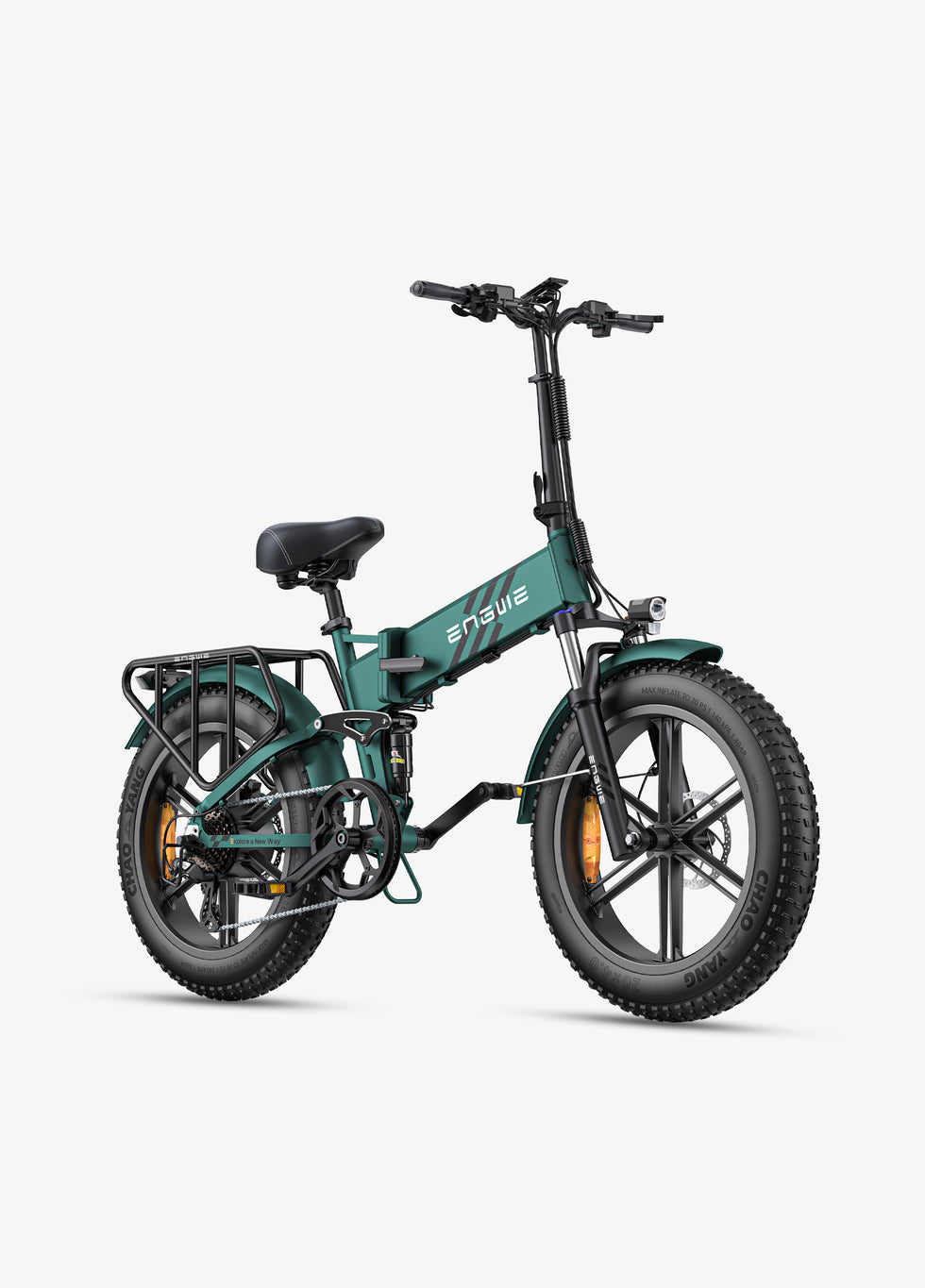
The ENGWE E26 is the end result of this philosophy. This Electric Bike is designed to conquer any trail, with the 250W hub motor and 70Nm of torque there won't be a hill you cannot climb. That's why its 2X dual suspension system, oversized 26 x 4.0-inch fat tires must be ridden on a car rack designed to hold serious equipment! Powered by a large capacity battery providing energy for a maximum range of 140 km and the massive load carrying capacity of 150 kg in combination with its hefty proportions make the ENGWE E26, a big bike which demands you use heavy transport able to support its weight. When choosing a rack for an e-bike of the caliber of the E26, certain specifications need to be adhered to in order to support its high performance.

- Higher Load Capacity: A rack for the E26 must have a high load capacity to guarantee safety on bumpy roads or with a heavy load. We looked for a per-bike capacity of at least 70 lbs.
- Fat Tire Compatible: The rack's wheel trays should be able to accommodate the E26's 4.0" fat tires safely without modification.
- Platform Design: With the platform design of this rack, your bike will be secured by the wheels and that would keep your bike frame from getting any damage.
- Rugged Construction: The design of the rack should reflect the stoutness of the ENGWE brand, using heavy-duty steel and aluminum to be ready for any adventure!

Top E-Bike Rack Brands of 2025
Ultimately whatever features are best, it’s also beneficial to know which brands hit home-runs on quality and innovation. After our 2025 testing, some standout manufacturers exist for racks designed specifically for e-bikes. These brands are known for tough engineering, easy usability and great long-term durability in their racks – it is worth an extra investment to keep your e-bike safe. You’ll need to ask yourself some questions about your specific needs, but because it’s one of the more competitive markets out there these are the best options you have and a great starting point for your research. They have been tried and tested by users and reviewers, who have put them to the test transporting electric bicycles thousands of miles while being safe for the bikes and budget.
- Thule EasyFold XT 2: Available in two bike or three bike options, Thule is known for its solid design and build quality of a rack that’s user-friendly (folds down when not in use so it doesn’t take up all the space), has an integrated ramp to make loading heavy e-bikes uber easy.
- Kuat NV 2.0: A high-end choice that was admired for its rock-solid stability, sleek design, and for including a one-of-a-kind integrated bike repair stand for maintenance on-the-go.
- 1UP USA Super Duty: A darling of the hardcore enthusiasts due to its minimalist all-metal construction that is extremely bombproof, and a secure touchless clamping system that makes contact only with the tires.
- Hollywood Racks Sport Rider for E-Bikes: A well-reviewed model that provides a great combination of strong weight capacity, longevity and cost, it was actually designed as an e-bike rack the entire way through.
Q1: Can a lightweight electric bike be carried with a normal bicycle rack?
A: No, we absolutely do not advise that. Even “light” e-bikes are heavier than the per-bike weight limit of regular racks. Yes, just remember to check the exact weight capacity of the rack and compare it with your e-bike’s weight in order not to overload the rack.
Q2: Is it necessary for me to have a specialist install the hitch receiver on my vehicle?
A: Yes. For your safety, trailering functionality and ease of vehicle integration, professional installation is recommended to install the receiver onto your vehicle.
Q3: How to save money to buy a good e-bike rack?
A: Shop for brands on sale during the off-season, which could be late fall or winter. Even better, spending a little more for a reliable brand name with a great warranty again can end up saving you money in repairs or replacement costs down the road.
One of the most important decisions you will make is selecting the right rack to unlock or unhinge limitless adventures with your e-bike.