

If you park an e-bike outside every day, the anti-theft features that matter most are not one clever lock or one tracking device, but several layers working together: a strong physical lock, motion detection or an alarm, GPS tracking, a removable battery and sensible parking habits.
That distinction matters for anyone buying an anti-theft e-bike for regular commuting. A lock is designed to delay or prevent physical removal. An alarm can draw attention to interference. GPS can tell you where a stolen bike has gone. A removable battery allows you to take a valuable component with you. None of those functions does exactly the same job.
German police guidance reflects the same layered approach. Hessen Police recommends securing the bike to a fixed object with a substantial lock and notes that batteries and other valuable accessories also need protection. In Hesse alone, around 3,500 of the bicycles reported stolen in 2025 were electric bicycles.
The practical question, then, is not simply whether an e-bike has “anti-theft technology”. It is which stage of the theft problem each feature addresses, and whether that combination fits the way you park every day.
Choose ENGWE as your preferred source on Google
Get ENGWE deals & e-bike tipsWhich Anti-Theft E-Bike Features Matter Most for Daily Outdoor Parking?
A useful anti-theft e-bike should combine physical resistance with detection and recovery features. For daily outdoor parking, the most relevant features are a secure locking setup, motion alerts, GPS positioning, geo-fencing where available, a removable battery and app-based security functions.
The key is to judge each feature by its role. Some features make the bike harder to take. Others tell you that something is happening. Others only become useful after the bike has already moved.
Strong Locks Still Come First
A built-in security system does not remove the need for a physical lock. The frame should still be attached to a fixed object that cannot simply be lifted, carried away or loaded into a vehicle.
German police guidance specifically warns that locking only a wheel is insufficient for an electric bicycle. Brandenburg Police recommends using a separate, substantial bicycle lock to secure the frame and wheels to a fixed object and suggests using multiple locks for valuable electric bicycles.
Italian guidance follows the same principle. The City of Milan advises cyclists to attach the frame—not merely the wheels—to a fixed structure, keep the lock tight against the bicycle and rack, and avoid basic wire-style locks that can be cut easily.
For daily commuters, that means the starting point for electric bike safety is mechanical: whatever electronic protection the bike offers, the frame still needs to be physically anchored.
Motion Detection and Anti-Theft Alarms
Motion detection addresses the period between someone touching the bike and actually riding or carrying it away.
A movement sensor can trigger an alert when the bike is disturbed. An acoustic alarm adds another layer by making interference conspicuous. These functions are especially useful when the bike is parked outside an office, café or shop and the owner is still relatively close.
They should not be confused with a physical immobiliser. A motion alert tells you something is happening; it does not make a cut lock uncuttable. That is why an effective anti-theft e-bike combines alerts with a substantial mechanical lock.
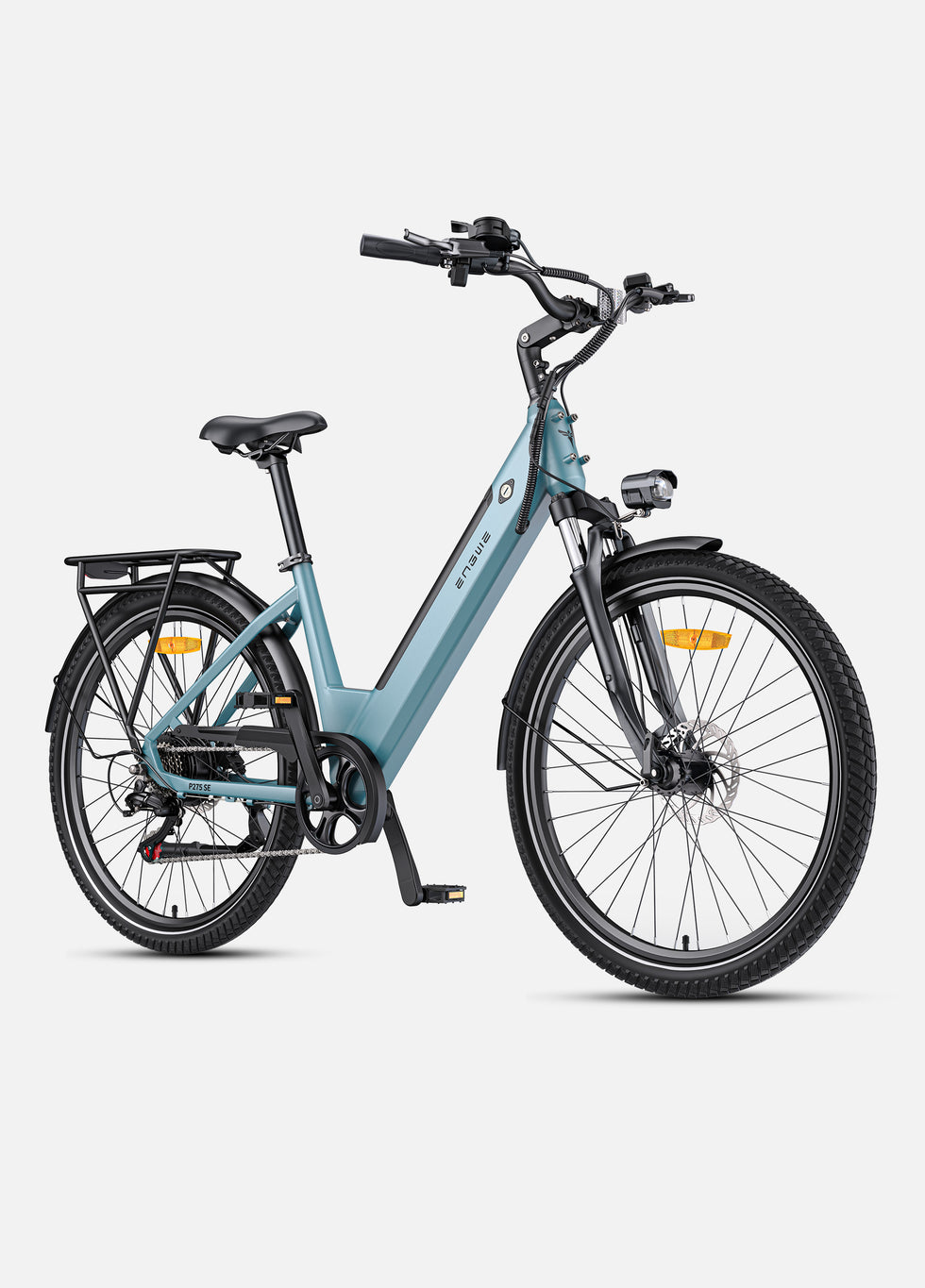
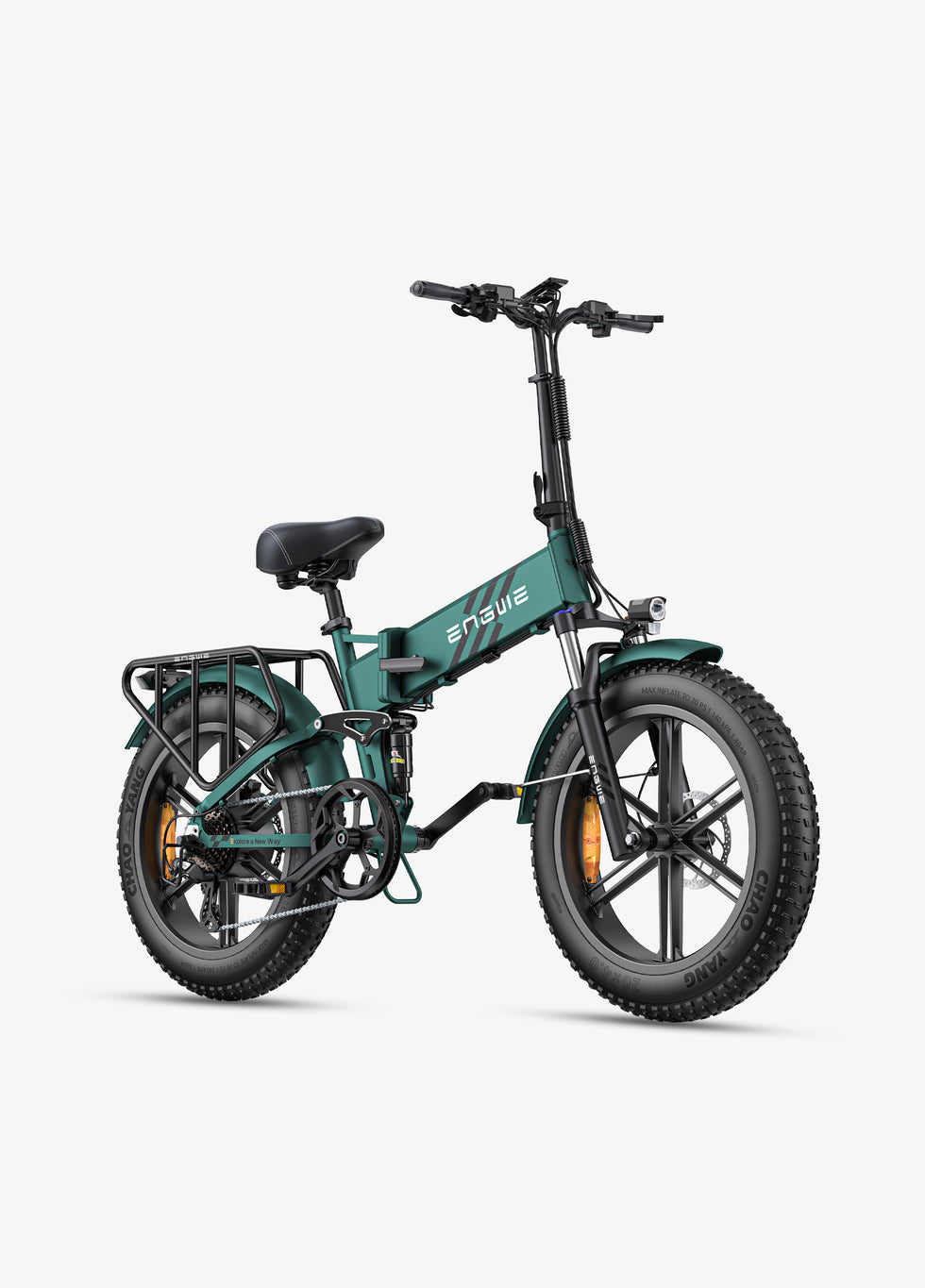
ENGWE uses this approach on several current EU models. The N1 Air incorporates motion detection, while the Engine Pro 3.0 Boost combines motion alerts with GPS tracking and app connectivity. The E26 3.0 Pro adds a dedicated anti-theft alarm alongside GPS.
GPS Tracking and Geo-Fencing
GPS becomes most valuable once the bike has moved beyond where it was parked.
An integrated GPS system can report the bike's position through an app. Geo-fencing goes one step further by defining a virtual area around the parked bike and responding when the bike leaves that area.
That creates an important distinction:
A lock helps prevent removal. GPS helps detect and trace removal.
ADAC recommends securing the bike to a fixed object first and treats GPS as an additional theft-protection layer. It also notes practical factors such as connectivity, service continuity and possible subscription costs when evaluating trackers.
For someone choosing an electric bike for commuting, integrated tracking has an ownership advantage: the tracking function is already part of the bike's connected system rather than something the rider must remember to install and maintain separately.
Removable Batteries Reduce the Value Left on the Street
A removable battery e-bike gives its owner a security decision that a fixed-battery design does not: the battery can come inside while the bicycle remains outside.
That matters because the battery is a major functional component. Removing it protects the battery itself while also leaving the parked bike without its normal electric-assist power source.
German police guidance explicitly recommends taking valuable electric-bike accessories such as the battery with you where practical. Brandenburg Police also notes that the lock built into many e-bike battery mounts should not be treated as complete theft protection.
This does not mean every five-minute stop requires carrying a battery through a shop. It does mean that a removable design gives a commuter another security layer for longer parking periods.
App-Based Locking and Smart Access
Connected e-bikes increasingly bring security, ride data and access functions into the same smartphone app.
The most useful security-related app features are those that have a clearly defined job: checking the bike's location, receiving movement alerts, monitoring the bike's status or controlling supported access functions.
For example, Engine Pro 3.0 Boost supports keyless unlocking, GPS tracking and motion detection through the ENGWE App. L20 3.0 Pro integrates GPS, 4G and Bluetooth in its IoT module and supports app monitoring and anti-theft functions.
Smart access should still be viewed as part of a layered anti-theft e-bike setup rather than a substitute for physically securing the frame.
ENGWE E-Bikes With Anti-Theft Features for Everyday Commuting
ENGWE approaches everyday e-bike security in more than one way. Some models place integrated GPS and connected anti-theft technology at the centre of the package. Others make the bicycle compact and portable enough to reduce how often it needs to remain outside at all.
That creates different positive use cases rather than a single hierarchy of products.
ENGWE N1 Air — Smart Security for Urban Commuting
15.6 kg | 250W rear hub motor, 40 Nm | 360Wh removable Samsung battery | motion detection, GPS tracking and geo-fencing
The N1 Air brings the security discussion directly into the city electric bike category. At 15.6 kg in the relevant N1 Air configuration, its carbon-fibre platform is designed around relatively low mass, while the 250W MIVICE rear hub motor and torque sensor keep the electric system visually restrained. The security package adds motion detection, GPS tracking and geo-fencing rather than relying only on a battery key or conventional bike lock.
That combination is particularly relevant to a rider moving repeatedly between home, work, cafés and urban appointments. Motion detection can flag interference; GPS and geo-fencing add location awareness; the 360Wh Samsung battery can also be removed when the parking situation justifies taking it inside.
N1 Air therefore fits a useful anti-theft e-bike profile for city use: lightweight enough to remain manageable in everyday environments while retaining integrated connected protection. The current EU product page states that its IoT service is free for the first year, with the present renewal price listed as €39 per year, so that service cost should be included in long-term ownership planning.

ENGWE L20 3.0 Pro — GPS Protection for a Compact Commuter
250W MIVICE X700 mid-drive | 100 Nm | 720Wh removable battery | GPS, 4G, Bluetooth and app monitoring
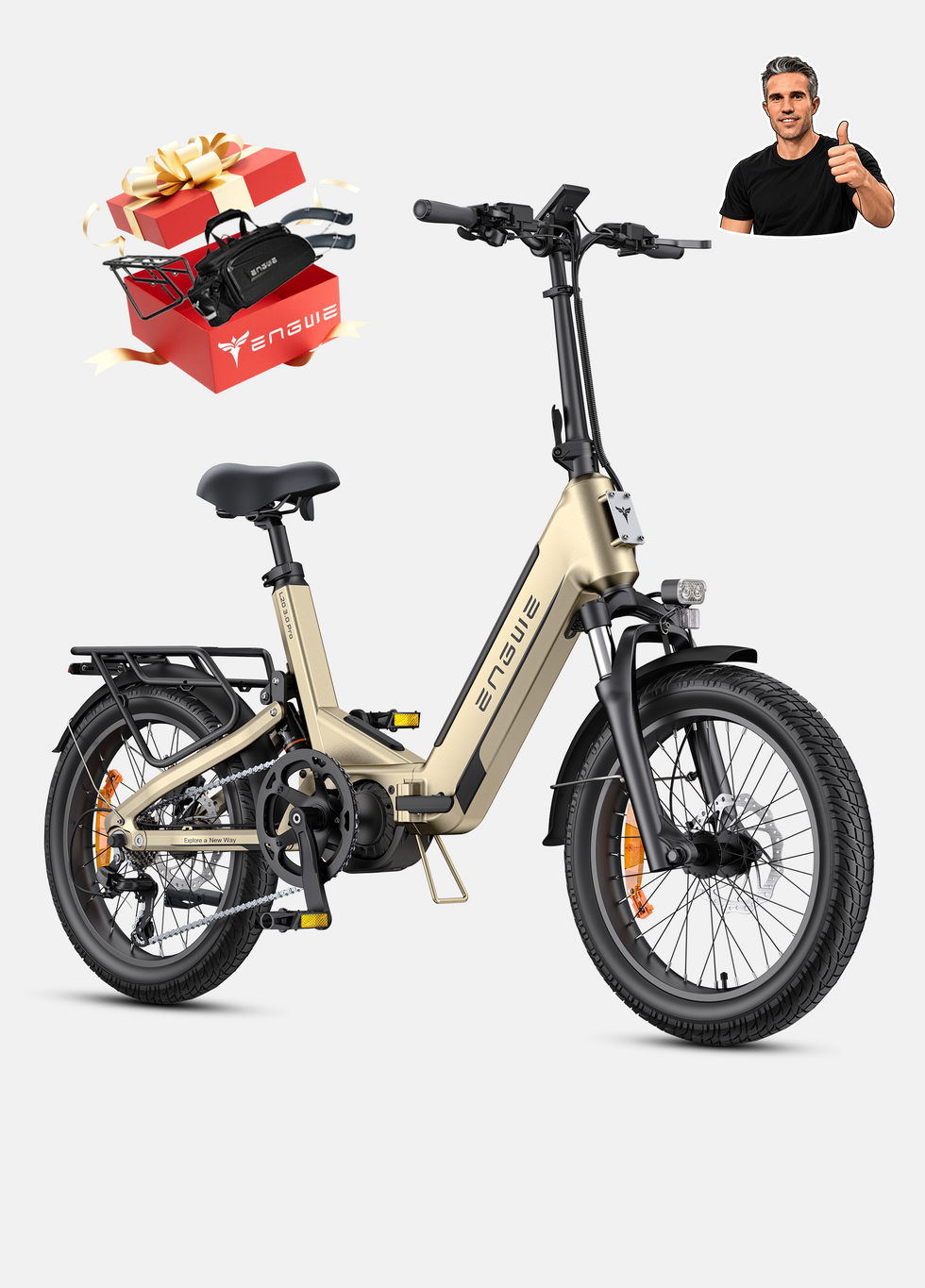
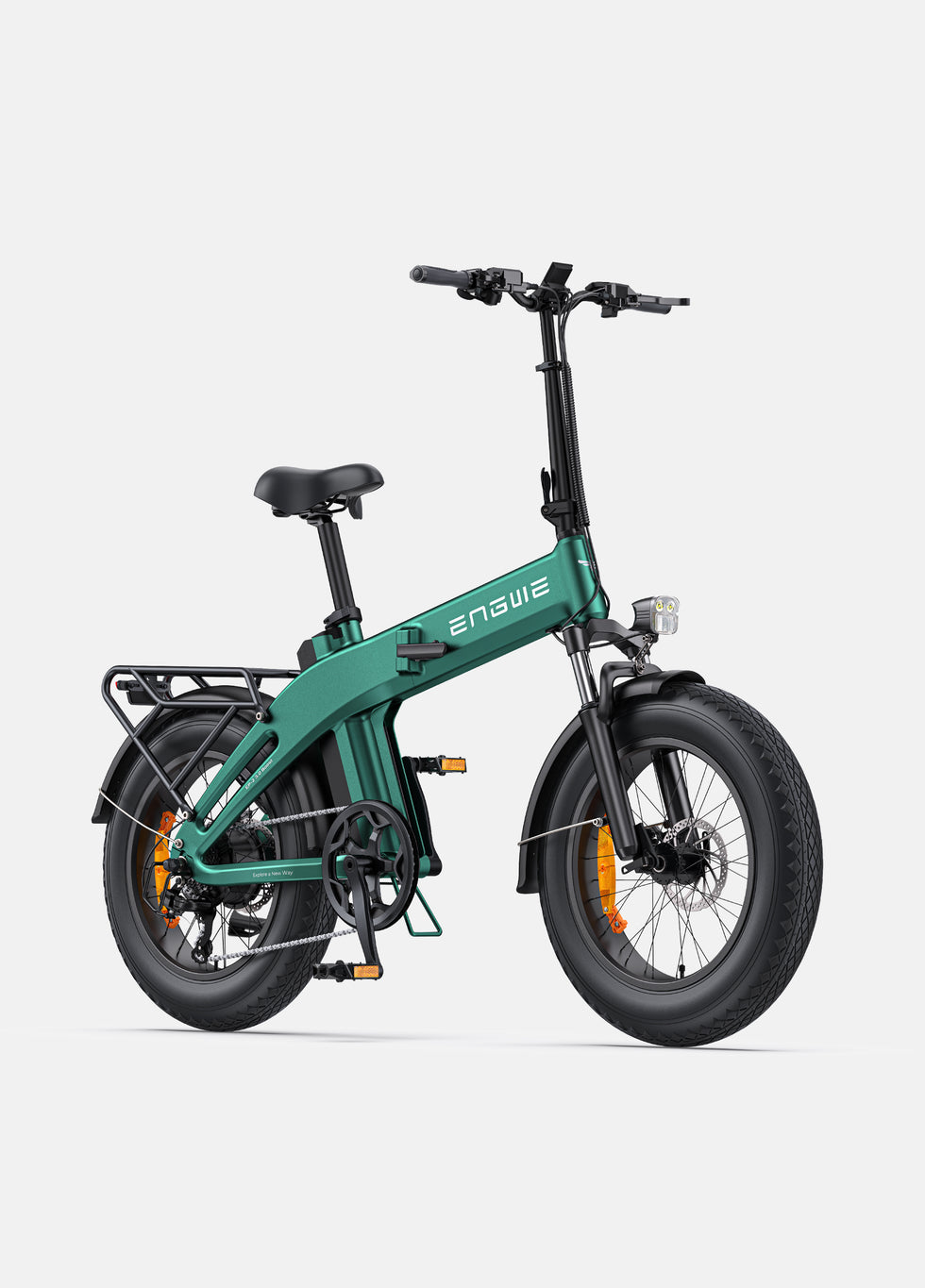
L20 3.0 Pro combines connected security with a very different riding format. Its 250W MIVICE X700 mid-drive produces up to 100 Nm of torque through a torque-sensing assistance system, while the 720Wh removable battery and full-suspension compact frame are aimed at riders whose commute extends beyond short, smooth urban streets.
For this article, the notable part is the integrated ENGWE IoT module. GPS, 4G and Bluetooth connectivity support motion detection, location tracking and app monitoring, giving a rider visibility over the bike after parking.
The 720Wh battery is removable, so the same bicycle offers both connected protection and component removal for longer stops. Its foldable construction also gives owners more storage flexibility when a workplace, garage or indoor area is available.
That makes L20 3.0 Pro a particularly relevant compact electric bike for commuters who want anti-theft connectivity alongside suspension, mid-drive assistance and a larger battery for longer daily riding.

ENGWE Engine Pro 3.0 Boost — Smart Anti-Theft for Folding Fat-Tyre Riders
250W EU configuration | 90 Nm | 720Wh removable battery | GPS, 4G, Bluetooth, motion detection and keyless unlocking
Engine Pro 3.0 Boost takes the same connected-security idea into a 20 × 4.0-inch fat-tyre, full-suspension folding platform. Its EU version uses a 250W system with up to 90 Nm of torque, while the removable 720Wh battery is paired with an 8A charger. ENGWE lists real-world range figures of 130 km at PAS 1, 108 km at PAS 3 and 80 km at PAS 5 under its stated test conditions.
Its security system is one of the defining features. The ENGWE IoT module combines GPS, 4G and Bluetooth, while the app provides GPS tracking, motion detection alerts and keyless unlocking.
Those functions make sense for a rider who wants an anti-theft e-bike but also needs wide tyres, folding capability and full suspension for routes that mix urban surfaces with rougher paths. The security technology does not change the need for a lock, but it adds immediate awareness and location data to a bicycle designed for broader daily use.

ENGWE E26 3.0 Pro — GPS and Alarm Protection for Larger Daily Rides
250W MIVICE X700 mid-drive | 100 Nm | removable 720Wh LG battery | GPS tracking, anti-theft alarm and app control
E26 3.0 Pro brings connected security to ENGWE's larger 26 × 3.0-inch all-road format. The 250W mid-drive produces up to 100 Nm, while front suspension and a four-bar rear suspension system are designed for riding across tarmac, gravel-paved routes, country roads and other mixed surfaces.
Its anti-theft functions are straightforward: GPS tracking, an anti-theft alarm and ENGWE App control. That makes the E26 3.0 Pro relevant for commuters who want their electric bike for commuting to double as a more versatile all-road machine without giving up integrated location protection.
The 720Wh LG battery is removable, providing another layer when the bike must remain parked for hours. ENGWE currently states that the E26 3.0 Pro GPS service is included for the first year and that continued GPS service is presently €39 per year afterwards, with renewal left to the user.

ENGWE Zip — When Bringing the Bike Inside Is the Better Security Strategy
16.9 kg without battery / 19.4 kg with battery | 250W, 40 Nm | 360Wh removable LG battery | three-stage folding design
Not every security decision needs to happen after a bicycle has been locked to a rack. Sometimes the more useful question is whether the bicycle needs to stay outside in the first place.
ENGWE Zip approaches that problem through portability. The current EU specification lists the bike at 16.9 kg without its battery and 19.4 kg with the battery installed. Its patented triple-folding layout is designed to reduce the folded footprint, while the 360Wh LG battery can be removed and carried separately. ENGWE also supplies a portable battery bag.
For an office worker able to place a folded compact electric bike under a desk, behind a door or in another permitted indoor space, bringing the bike inside removes an entire category of outdoor access risk. The torque sensor, 250W rear hub motor and 40 Nm output also keep the Zip focused on day-to-day city mobility rather than simply being a storage exercise.
This is a different security strategy from GPS-heavy models: reduce exposure by making indoor storage easier.

An Anti-Theft E-Bike Still Needs the Right Locking Setup
Even an anti-theft e-bike with integrated GPS, motion detection and an app should be treated as a bicycle that still needs to be physically secured.
Digital security becomes much more useful when the physical layer has already forced a thief to spend more time, make more noise or use more tools.
Lock the Frame to Something That Cannot Be Moved
The fixed object matters as much as the lock.
A high-quality lock around the wheel alone may stop the wheel from turning, but it does not necessarily stop someone from lifting the rest of the bike. German police guidance therefore emphasises securing the bicycle itself to an anchored object. Milan's official theft-prevention guidance similarly recommends fastening the frame rather than only a wheel.
For an electric bike for commuting, look at the parking rack before choosing the exact locking position. A rack that can be unscrewed, a low post that a locked bike can be lifted over, or thin street furniture undermines the security of the lock attached to it.
Why Two Different Locks Can Make Sense for Long Stops
A five-minute stop and an eight-hour workday do not create the same exposure.
For a full working day outside, a second substantial lock can increase the number of components and attack points that have to be defeated. Brandenburg Police specifically advises the use of multiple locks for valuable electric bicycles.
Using different lock formats can also make the setup less straightforward to attack. The practical objective is not to make a theft mathematically impossible. It is to increase the effort required while the bike remains visible and physically attached to its surroundings.
Before buying a lock, also check any requirements imposed by your bicycle or household insurer. A security rating only helps with an insurance claim if it matches the policy's actual conditions.
Protect the Wheels and Other Removable Parts
Once the frame is anchored, consider what can still leave without it.
Quick-release wheels, lights, bags and other detachable equipment can remain exposed even when the bicycle itself is secured. Milan advises securing the frame and wheels where possible and taking easily removable items with you.
The same reasoning applies to a removable battery e-bike. If the parking period is long enough to justify the inconvenience, taking the battery with you protects a component that the primary frame lock does not necessarily protect.
Should You Remove the Battery Every Time You Park?
No. Removing the battery for every single stop is not a universal requirement, but it becomes increasingly sensible as parking time and exposure increase.
German police and ADAC both recommend removing an e-bike battery when the bicycle is parked where practical, because the battery is itself a valuable component.
The most useful approach is therefore risk-based rather than ritual-based.
Short Errands vs a Full Workday
For a short stop outside a shop where the bicycle remains visible and is securely locked, some riders may decide that removing the battery creates more inconvenience than useful protection.
An eight-hour workday is different. The bike stays in one predictable place for much longer, providing far more time for interference. Recent e-bike community discussions repeatedly raise exactly this concern: commuters ask whether a valuable e-bike can reasonably stay outside for an entire working day and whether the battery should come indoors. Location, visibility and access control are usually the deciding variables in those discussions.
A removable battery e-bike lets the owner adapt: leave the battery in for a short, controlled stop or take it inside when the bike will be unattended for hours.
Battery Locks Are Not the Same as Full Bike Security
A battery key lock secures the battery to its mounting system. It does not secure the entire bicycle to the city around it.
That distinction is important because a rider can lock the battery perfectly and still leave the frame poorly secured. Conversely, a well-anchored frame does not automatically secure a battery or detachable accessory.
Brandenburg Police makes this distinction explicitly, warning that integrated battery locks should not be treated as sufficient theft protection on their own.
The useful mental model is therefore simple: frame security and battery security are two separate jobs.
How Much Does GPS Actually Help After an E-Bike Is Stolen?
GPS can materially improve location awareness after a bicycle moves, but it does not physically stop a theft. Its value is detection, tracking and providing location information that can be passed to the police.
That makes GPS highly relevant to an anti-theft e-bike, but only as one layer of the system.
GPS Helps With Detection and Recovery, Not Physical Prevention
A connected GPS tracker can calculate the bike's position and relay it through a mobile network to an app. Combined systems can also use motion detection so the owner receives an alert before opening the map.
ADAC treats this as a supplement to secure physical locking, not a replacement. The organisation advises riders to secure the bike to a fixed object, keep identifying information available and consider a GPS tracker as an additional theft-protection measure.
The distinction also explains why a city commuter can benefit from both technologies at once: a physical lock creates resistance; the connected system creates awareness.
Built-In Tracking vs Aftermarket Trackers
Integrated tracking and aftermarket tracking solve the same broad problem in different ways.
A built-in system can combine the tracker, mobile connection and bike app within one platform. That reduces the need to find a hidden mounting position, manage a separate device or determine whether an accessory tracker fits the bicycle.
An aftermarket system offers more flexibility, particularly when the bike does not include tracking from the factory. However, the buyer needs to consider power supply, installation location, connectivity, device compatibility and any recurring network or service charges.
ADAC's tracker review also illustrates why “GPS tracker” is not one universal technology. A true GPS and cellular tracker can calculate and transmit its own position, while Bluetooth-network devices such as an AirTag rely on nearby compatible devices to relay location information.
For someone actively shopping for an anti-theft e-bike, that makes factory-integrated GPS a feature worth distinguishing from a generic “tracker compatible” claim.
If You Can See the Stolen Bike on a Map, Contact the Police
A location pin is information, not permission to confront whoever has the bicycle.
ADAC specifically advises owners not to attempt to retrieve a stolen bike on their own and to involve the police immediately. Location information, the frame number, photographs and proof of ownership can all help officers identify the bicycle.
The usefulness of GPS in real cases is not merely theoretical. In May 2025, Milan's local police reported recovering two GPS-equipped bicycles stolen near Piazza Fontana after using the location data in their investigation.
For an owner, the practical lesson is clear: if the bike moves unexpectedly, preserve the location data and report the theft rather than turning tracking into a personal recovery mission.
Where You Park Matters as Much as the Technology
The same anti-theft e-bike can face very different exposure depending on where and for how long it is parked.
Italian official guidance recommends visible parking areas and even suggests avoiding the exact same parking position every day where possible. German police emphasises securing the bike to a fixed object, including in places that may initially feel relatively secure.
This makes parking context part of the buying decision, not an afterthought.
Short Stops Outside Shops
For short stops, visibility is extremely valuable.
Choose an anchored rack in an open area where passers-by, staff or nearby customers can see the bicycle. A robust frame lock-up remains necessary even when the rider expects to be inside for only a few minutes.
An anti-theft e-bike with motion detection adds another useful layer here because an alert may reach the rider while the bike is still nearby.
Eight-Hour Workplace Parking
All-day parking deserves a different setup from a coffee stop.
A commuter should first ask whether secure indoor or controlled-access bicycle storage is available. If outdoor parking is the only practical option, use a fixed rack, substantial locks, the bike's connected security features and, where practical, bring the removable battery indoors.
This is also where a model's format can change the security equation. A lightweight city electric bike such as the N1 Air combines connected anti-theft functions with relatively low weight. A folding compact electric bike such as the ENGWE Zip may allow some users to avoid outdoor parking by bringing the bike into an office where building rules permit it.
Security, in other words, can come from protecting the parked bike or from reducing the need to park it outside.
Train Stations and Other Predictable Daily Parking Spots
A station bicycle rack can be useful because it is designed for bikes, but frequent commuters should still consider predictability.
The City of Milan specifically recommends varying the parking position where possible rather than leaving a bicycle in exactly the same place every day.
For a routine station commute, that makes an anti-theft e-bike with GPS and movement alerts especially relevant, but it does not change the physical requirements: use an anchored structure, secure the frame and consider a second lock when the bike will remain there for hours.
Overnight Outdoor Parking
If indoor storage is available, bringing the bicycle inside overnight removes prolonged public access and should generally be the lower-exposure arrangement.
Where outdoor overnight parking cannot be avoided, treat it as the most demanding version of everyday parking: secure the frame to a fixed object, use substantial physical security, remove valuable detachable components where practical, activate connected security and record identifying information in advance.
Hessen Police even recommends locking bicycles appropriately in cellars and garages rather than assuming that a building alone provides complete protection.
That is a useful reminder for electric bike safety more broadly: a door, courtyard or quiet residential location is not a replacement for actually securing the bicycle.
A 60-Second Security Routine for Daily E-Bike Commuters
A good security system only works if it is easy enough to repeat every day. For a commuter using an anti-theft e-bike, a practical routine is:
-
Choose the anchor first. Park beside a fixed, substantial rack or structure in a visible location rather than choosing the closest empty space.
-
Lock the frame to the anchor. Do not rely on immobilising a wheel without attaching the bicycle to something fixed.
-
Add another physical layer for long stops. For an all-day work or station stop, secure another wheel or part of the bicycle with a second substantial lock where appropriate.
-
Decide whether the battery should come with you. A short visible stop and an eight-hour parking period do not need the same battery strategy.
-
Activate and check connected security. Confirm that motion alerts, GPS or geo-fencing are active if the bike supports them.
-
Keep identifying details accessible. Store the frame number, purchase record and current photographs somewhere separate from the bicycle.
-
If the bike moves unexpectedly, use the data rather than confronting anyone. Preserve the location information and contact the police.
That routine turns electric bike safety into a repeatable behaviour rather than something considered only after an expensive bicycle has disappeared.
Conclusion
The most useful anti-theft e-bike is not simply the one with the longest feature list. It is the one whose security layers match how you actually use and park it.
For frequent outdoor parking, start with the physical fundamentals: attach the frame securely to a fixed object and increase the locking protection when the bike will remain unattended for hours. Motion alerts can tell you when someone interferes with the bike. GPS and geo-fencing add detection and location data. A removable battery gives you control over how much valuable equipment remains outside.
ENGWE offers several ways to build those priorities into daily riding. N1 Air focuses on lightweight urban mobility with motion detection, GPS and geo-fencing. L20 3.0 Pro combines connected security with a compact, full-suspension mid-drive format. Engine Pro 3.0 Boost adds smart protection to a folding fat-tyre platform, while E26 3.0 Pro brings GPS and an alarm to a larger all-road design. Zip takes another route altogether: compact folding and a removable battery can make bringing the bike indoors part of the security strategy.
Whichever format suits your commute, treat theft protection as a system rather than a single feature. Lock what must stay outside, remove what does not need to stay outside, use connected technology for awareness and tracking, and choose a parking setup that does not undermine the technology you paid for.
FAQs
Can an E-Bike With GPS Still Be Stolen?
Can an E-Bike With GPS Still Be Stolen?
Yes. GPS does not physically stop someone from cutting a lock or moving an e-bike. Its main value is detecting movement, showing location and helping provide usable information after a theft. A strong anti-theft e-bike setup therefore combines GPS with a substantial lock attached to a fixed object. Models such as the ENGWE N1 Air add motion detection and geo-fencing to GPS, creating an additional digital layer rather than replacing mechanical security.
Is a Removable Battery Better for Theft Protection?
Is a Removable Battery Better for Theft Protection?
A removable battery can add useful flexibility because the rider can take a valuable and functionally important component indoors during longer parking periods. That does not automatically make every removable battery e-bike theft-proof, because the frame still needs to be secured independently. ENGWE N1 Air, L20 3.0 Pro, Engine Pro 3.0 Boost, E26 3.0 Pro and Zip all provide removable-battery designs suited to different commuting and storage needs.
Is One Lock Enough for an E-Bike Parked Outside All Day?
Is One Lock Enough for an E-Bike Parked Outside All Day?
One substantial lock attached correctly is far more useful than a weak lock used carelessly, but all-day outdoor parking justifies additional protection. German police guidance recommends multiple locks for valuable electric bicycles and securing the frame to a fixed object. For an electric bike for commuting that remains outside throughout the working day, combining physical locks with motion detection, GPS and a removable battery creates distinct layers rather than relying on one point of defence.
Should I Leave My E-Bike Outside Overnight?
Should I Leave My E-Bike Outside Overnight?
Indoor storage is preferable when it is realistically available because it removes prolonged public access to the bicycle. If outdoor overnight parking is unavoidable, use an anchored locking setup, consider multiple substantial locks, remove valuable detachable components and activate any GPS or alarm system. A compact electric bike such as ENGWE Zip can make indoor storage practical in smaller spaces, while connected ENGWE models provide additional location and alert functions when outdoor parking is necessary.