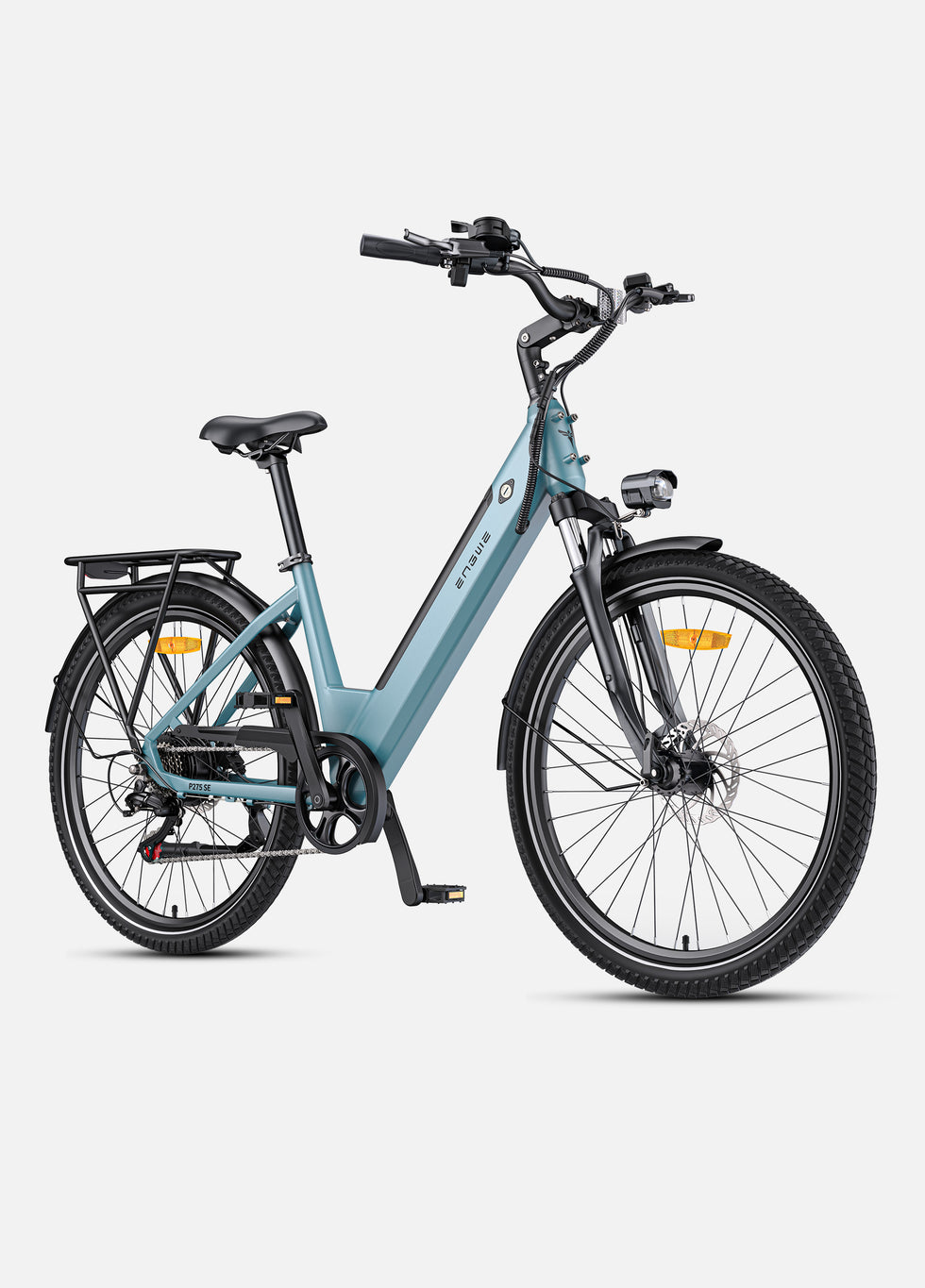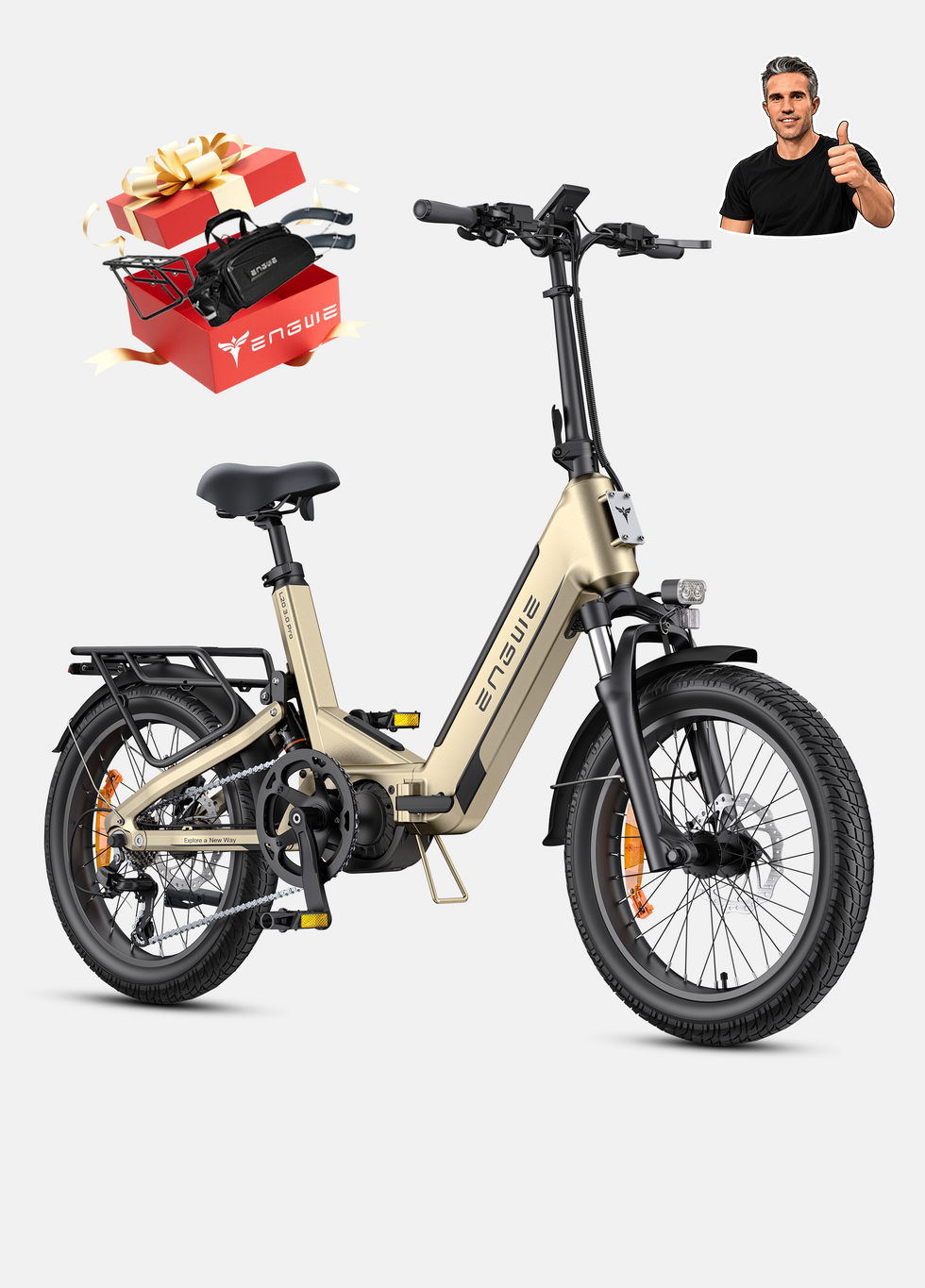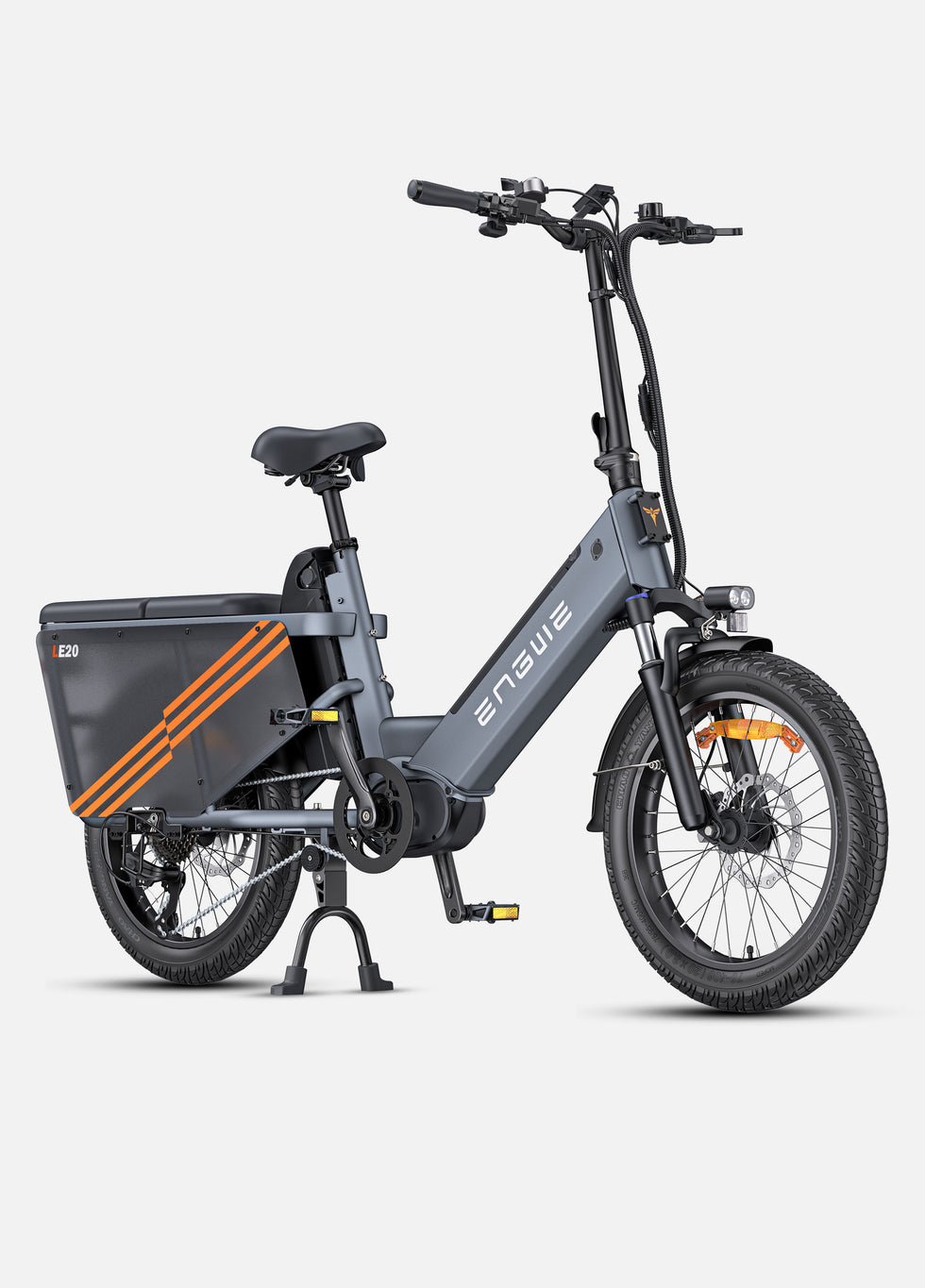


The best lightweight folding e bike for urban commuting is not simply the model with the lowest number on the scale. For riders combining cycling with trains, apartment storage or office access, a useful folding e-bike also needs a manageable folded shape, suitable wheel size, practical battery system and an EU-appropriate 250W pedal-assist configuration.
The ten bikes below all target lightweight urban mobility, but their priorities vary. Some push weight toward conventional-bicycle territory, while others add larger batteries, hydraulic brakes, gearing, belt drives or more everyday equipment while remaining below the 20 kg threshold under the manufacturer's stated weight basis.
One detail matters before comparing them: manufacturers do not always calculate weight in the same way. A figure may include the battery but exclude accessories, or refer to a particular drivetrain or frame configuration. This guide therefore looks beyond headline kilograms and considers what each specification means when you actually need to ride, fold, carry and store the bike.
Choose ENGWE as your preferred source on Google
Get ENGWE deals & e-bike tipsBest Lightweight Folding E-Bike Comparison: Weight, Folded Size, Range and Urban Fit
A good comparison starts with the complete mobility problem rather than weight alone. Someone carrying a bike up two station staircases every day has different priorities from a rider who mainly needs a folding electric bike to fit beside a desk or in a small apartment.
| Model | Published Weight | Published Folded Size | Claimed Range | Wheel Size | Urban Focus |
|---|---|---|---|---|---|
| ENGWE Zip | 19.4 kg with battery / 16.9 kg without | 62.5 × 37.4 × 67.3 cm | Up to 120 km in PAS 1 | 16" | Compact multimodal commuting, small-space storage |
| ENGWE P20 | 18.5 kg published bike weight | 90 × 42 × 62 cm | Up to 100 km | 20" | Daily city commuting, low-maintenance belt drive |
| VELLO Bike+ | From 12.9 kg including battery, configuration-dependent | Approx. 79 × 29 × 57 cm on current Bike+ builds | Up to 70 km on current Automatic specification | 20" | Very low weight with full-size folding-bike wheels |
| Brompton Electric T Line | From 13.8 kg with battery | 64.5 × 60 × 32 cm | Up to 90 km | Compact folding format | Frequent carrying and multimodal travel |
| ADO Air Carbon | 15.9 kg net; accessories excluded | Manufacturer highlights a 15-second fold | Up to 100 km | 20" | Carbon construction, belt-drive city commuting |
| Brompton Electric P Line | From 16 kg total | 64.5 × 60 × 32 cm | Up to 90 km | Compact folding format | Train commuting and rollable folded transport |
| EOVOLT Morning Origins | 16.5 kg with battery | 73 × 63.5 × 40 cm | Up to 50 km | 16" | Short urban trips and intermodal travel |
| Ahooga E-Max Derailleur | 17 kg | 72 × 69 × 37 cm | Range extender available for up to 95 km | 20" | Full-size riding character in a compact package |
| Gocycle G4i | From approx. 17.6 kg | Approx. 83 × 37 × 75 cm in one stowed configuration | Up to 80 km | 20" | Integrated urban design and fast folding |
| ADO Air 20S 2026 | 18 kg net including battery, accessories excluded | Check current configuration | Up to 100 km | 20" | Belt-drive commuting and compact storage |
The table also shows why kilograms alone can mislead. ENGWE Zip, for example, weighs 19.4 kg ready with its battery installed but drops to 16.9 kg when the removable battery is carried separately. ADO publishes 15.9 kg for the Air Carbon as net weight excluding accessories, while its fully equipped figure reaches 21 kg. VELLO's lowest published Bike+ figure is configuration-dependent. Comparing like with like matters.
A related distinction is worth making for ENGWE shoppers. The ENGWE N1 Air weighs just 15.6 kg and uses a carbon-fibre frame, 250W MIVICE rear-hub motor, torque sensor and 700 × 38C wheels, making it a notably light city e-bike. It is not, however, a folding model, so it is not included in this folding-bike ranking. Its design serves riders who prioritise full-size urban-bike geometry and low overall weight rather than a folding frame.
10 Lightweight Folding E-Bikes Under 20 kg for Urban Use
ENGWE Zip
Core specs: 19.4 kg with battery / 16.9 kg without | 250W rear-hub motor | 40 Nm | 360Wh removable LG battery | 16 × 1.95" tyres | 62.5 × 37.4 × 67.3 cm folded
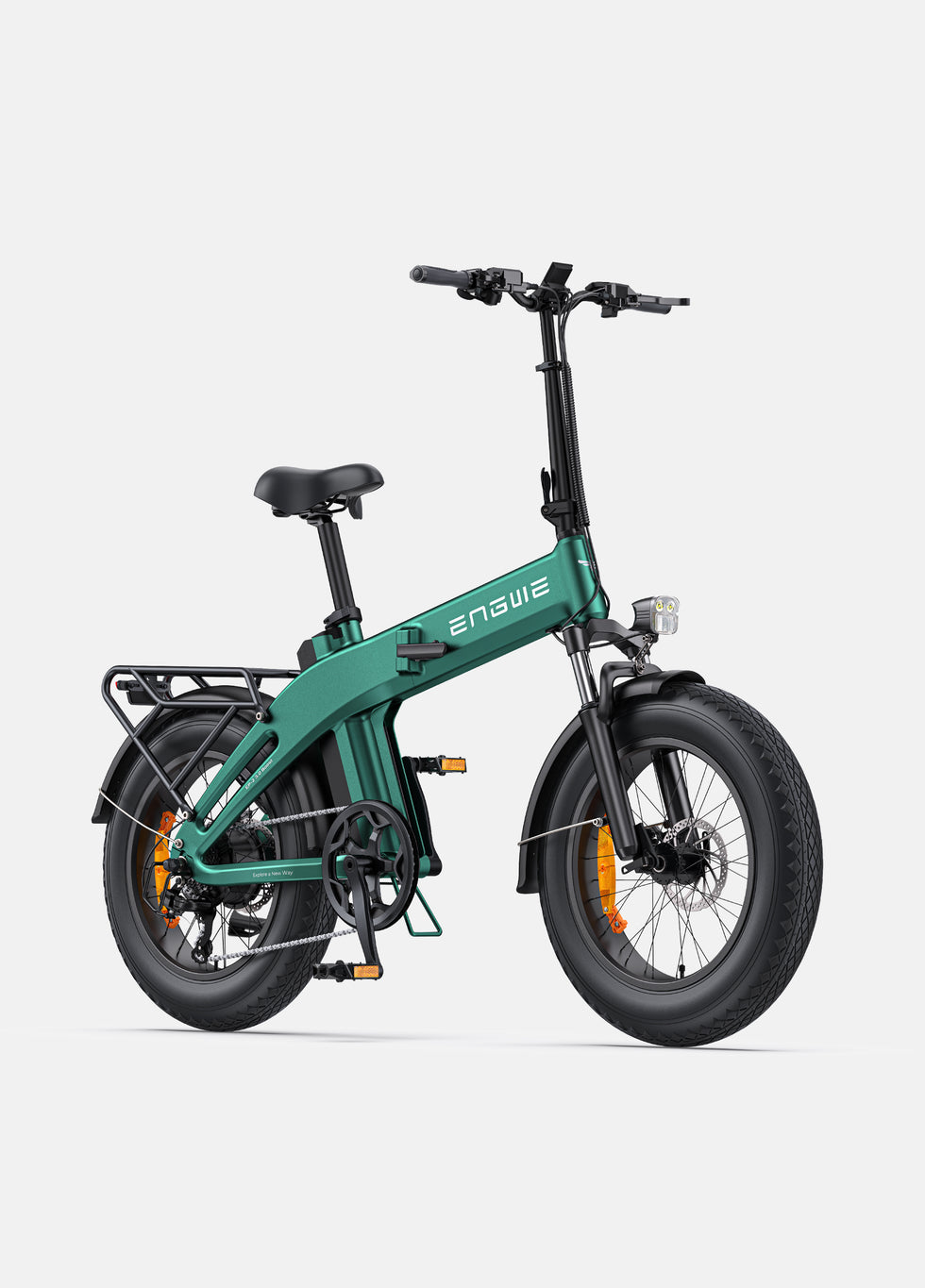
ENGWE Zip is built around the part of urban commuting that happens off the saddle as much as the ride itself. Its patented tri-fold structure reduces the bike to a short 62.5 cm folded length, while the 16-inch wheels help keep the overall package compact enough for trains, offices and smaller homes. The battery can also be removed before a carry, reducing the bike itself from 19.4 kg to 16.9 kg.
That portability does not require stripping the bike back to a minimal electrical system. Zip combines a 250W rear-hub motor with 40 Nm of torque and a torque sensor, so assistance responds to pedal pressure rather than simply switching on at a fixed cadence. Shimano 7-speed gearing gives the rider mechanical control over cadence on changing urban gradients, while hydraulic disc brakes with 160 mm rotors provide braking through a hydraulic system rather than cable pull.
The 360Wh battery is particularly relevant for mixed commuting. It is removable, uses LG cells and supports USB-C PD 3.0 charging and discharging, so the same battery system can also supply compatible portable electronics. ENGWE rates the Zip for up to 120 km in PAS 1, 85 km in PAS 2 and 60 km in PAS 3; actual distance will depend on assistance level, terrain, rider load, temperature and riding conditions. The suspension seatpost also adds a degree of vertical compliance without turning the bike into a heavier suspension folder.
For riders looking for a compact electric bike specifically because part of the journey involves a railway platform, a staircase or indoor storage, Zip has a clear identity: its folding architecture, removable battery and small wheels are all working toward the same multimodal use case.

ENGWE P20
Core specs: 18.5 kg published bike weight | 250W motor | 42 Nm | 36V 9.6Ah removable battery | 20 × 1.95" tyres | 90 × 42 × 62 cm folded
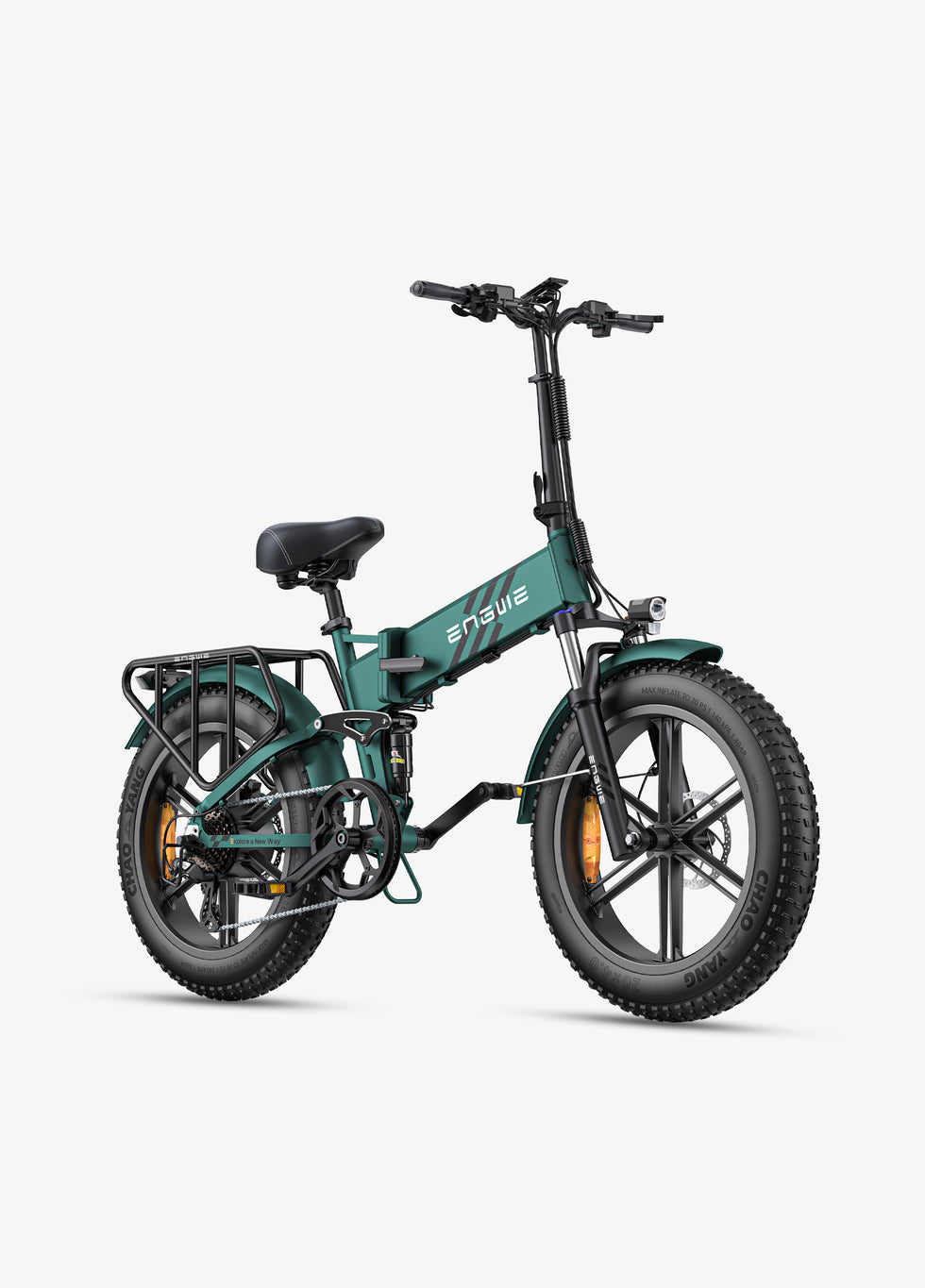
ENGWE P20 takes a different route to lightweight urban mobility. Its 20-inch wheels create a larger rolling platform than a 16-inch compact folder, while the 18.5 kg published bike weight still keeps it within the sub-20 kg category. Folded dimensions are 90 × 42 × 62 cm, so the P20 is particularly relevant when the bike still needs to fold for a train, car or apartment but the riding portion of the commute is substantial.
The drivetrain is one of the P20's defining features. A carbon belt replaces a conventional exposed chain, removing chain oil from the daily routine and reducing the amount of drivetrain cleaning associated with a normal city bicycle. A torque sensor measures pedal input and adjusts motor assistance accordingly, while the 250W motor produces a stated 42 Nm. The bike also uses hydraulic disc brakes and a removable internal 36V 9.6Ah battery.
ENGWE rates the battery system for up to 100 km and the European model for 25 km/h assistance. Those figures make the P20 more than a short last-mile machine: its specification is oriented toward riders who want one folding e-bike to handle the actual commute as well as storage or transport at either end.
The adjustable stem and saddle also broaden its practical fit, with ENGWE specifying a rider-height range of 155–190 cm. For urban riders who want a portable electric bike but prefer 20-inch wheels and the clean everyday ownership of a belt drive, the P20 has a distinct purpose within ENGWE's lightweight range.

VELLO Bike+
Core specs: From 12.9 kg including battery on selected configurations | 250W | up to 40 Nm | 20" wheels | approx. 79 × 29 × 57 cm folded on current Bike+ builds
The striking figure in the VELLO Bike+ family is its starting weight: VELLO advertises selected configurations from 12.9 kg including the battery, despite using 20-inch wheels. That combination addresses an unusual brief — retaining larger folding-bike wheels while pushing mass toward lightweight conventional-bike territory.
Configuration needs careful attention here. The current Bike+ Automatic product data lists approximately 13.9 kg without pedals for its standard chromoly build, with other frame and drivetrain configurations available. The Automatic uses an integrated Zehus motor-and-battery system, 250W assistance, up to 40 Nm and a belt drive. Its published folded dimensions are about 79 × 29 × 57 cm.
The Bike+ is therefore most interesting to commuters who rank low carrying mass very highly but still want 20-inch wheels for the riding sections of a multimodal journey.
Brompton Electric T Line
Core specs: From 13.8 kg with battery in 1-speed form | 345Wh battery | up to 90 km | titanium and carbon construction | 64.5 × 60 × 32 cm folded
The Electric T Line is engineered around extreme mass reduction. Brompton lists the current 1-speed e-Motiq version at 10.5 kg without the battery and 13.8 kg with it; the 4-speed configuration starts at 14.6 kg. Titanium frame elements and carbon components account for much of that weight strategy.
Its compact fold is equally central. The current e-Motiq model folds to 64.5 × 60 × 32 cm, while a removable 345Wh battery provides a claimed range of up to 90 km. On a daily route that involves repeated lifting rather than simply folding once at home, the combination of low complete weight and a compact package is the main reason to consider it.
The 1-speed and 4-speed versions serve different riding preferences, so buyers should compare the exact configuration rather than treating "Electric T Line" as one fixed weight.
ADO Air Carbon
Core specs: 15.9 kg net weight including battery but excluding accessories | 250W Bafang motor | 35 Nm | 37V 10Ah battery | 20 × 1.75" tyres | up to 100 km
ADO uses carbon fibre for both the frame and fork of the Air Carbon, placing lightweight construction at the centre of the design. The current EU product data gives a 15.9 kg net figure excluding accessories and a 21 kg fully equipped figure, which is a useful example of why weight methodology matters in this category.
The bike combines a Bafang rear-drive system with a torque sensor, single-speed carbon belt drive and hydraulic disc brakes. ADO also integrates app-based functions and GPS-related anti-theft features. The folding system is advertised as a 15-second process, while the 20-inch wheels keep it within the familiar geometry of many urban folding bikes.
For buyers attracted to carbon construction and a clean single-speed drivetrain, the Air Carbon packages those attributes into a folding commuter rather than a performance-oriented full-size e-bike.
Brompton Electric P Line
Core specs: From 16 kg total / 13 kg without battery | 345Wh battery | up to 90 km | 4-speed | 64.5 × 60 × 32 cm folded
The Electric P Line combines Brompton's compact folding format with a steel main frame, titanium rear structure and carbon components. The current German specification gives a complete weight of 16 kg and 13 kg without the battery.
The current e-Motiq system uses a 345Wh battery and is rated for up to 90 km. An important practical feature is how the folded bike can be moved: Brompton's SuperRoll concept is designed to let the folded bicycle roll rather than forcing the rider to carry its full weight across a station concourse.
That distinction matters because a portable electric bike spends plenty of time moving horizontally through stations, offices and corridors. A system that can roll securely when folded can reduce the amount of time the rider actually supports the bike's full mass.
EOVOLT Morning Origins
Core specs: 16.5 kg with battery | 250W rear motor | 35 Nm | 231Wh removable battery | 16" wheels | 73 × 63.5 × 40 cm folded
EOVOLT's Morning Origins uses 16-inch wheels and a compact 73 × 63.5 × 40 cm fold, with the complete bike listed at 16.5 kg including its battery. The format clearly prioritises short urban connections, public transport and indoor storage.
The 231Wh LG battery is integrated into the seatpost but removable, while the 250W rear motor is paired with a torque sensor and four mechanical gears. EOVOLT specifies up to 50 km of range and uses Shimano MT200 hydraulic disc brakes with 160 mm rotors.
A smaller battery helps contain weight, while the gearing gives riders more control over cadence than a single-speed system. That specification makes sense for urban journeys where portability is more important than maximising battery capacity.
Ahooga E-Max Derailleur
Core specs: 17 kg | 250W / 35 Nm | 248Wh battery | torque sensor | 20" wheels | 72 × 69 × 37 cm folded
The Ahooga E-Max Derailleur uses a patented double-triangle aluminium frame rather than the more familiar single central folding tube. Its 20-inch wheels, 17 kg weight and folded dimensions of 72 × 69 × 37 cm put it firmly in the lightweight urban-folder category.
Power comes from a 250W, 36V system with up to 35 Nm, five assistance levels and a torque sensor. A 248Wh battery is locked inside the frame but can be removed for charging. The derailleur model uses an eight-speed Microshift Acolyte drivetrain and Shimano MT200 hydraulic brakes.
Ahooga also offers a range extender that increases the published maximum range to as much as 95 km. That modular approach is useful when the normal commute rewards a lighter base configuration but occasional longer rides need additional battery capacity.
Gocycle G4i
Core specs: From approx. 17.6 kg | 250W EU motor | approx. 375Wh removable battery | up to 80 km | 20 × 2.25" tyres
The Gocycle G4i packages its drivetrain, frame structure and controls into a highly integrated urban design. For the European specification, Gocycle lists a 250W continuous front-hub motor, a removable 36V 10.4Ah battery of approximately 375Wh and a claimed range of up to 80 km. Published weight starts at approximately 17.6 kg.
The G4i uses 20-inch wheels, hydraulic disc brakes and an enclosed Cleandrive transmission with electronic predictive shifting. Its fast-folding frame and handlebar are designed for storage rather than simply reducing overall bicycle length.
Gocycle has published stowed dimensions around 83 × 37 × 75 cm with the kickstand down on G4i specifications, although riders should check the exact current European configuration and any accessories before relying on those dimensions for railway travel.
ADO Air 20S 2026
Core specs: 18 kg net including battery, accessories excluded | 250W EU system | torque sensor | carbon belt drive | 20 × 1.95" tyres | up to 100 km
The Air 20S 2026 keeps the familiar aluminium 20-inch folding-bike format but removes the conventional chain in favour of a carbon belt. For commuters, that means a drivetrain that does not require chain lubrication and is less likely to transfer chain grease to clothing or luggage during indoor storage.
ADO lists the current model at 18 kg net, including the battery but excluding accessories; the fully equipped figure is 24 kg. That difference is particularly important for shoppers filtering products by an "under 20 kg" threshold.
The current specification adds a torque sensor, removable battery, hydraulic disc brakes and up to 100 km of claimed range. Its combination of belt drive and 20-inch wheels targets riders who want a lightweight folding electric bike for regular city riding rather than the smallest possible folded footprint.
What “Under 20 kg” Really Means When Comparing Folding E-Bikes
A sub-20 kg label is useful only when you know what has been weighed. Battery, pedals, mudguards, rack, lighting equipment and other accessories can move a bike across that threshold without changing the frame itself.
For a best lightweight folding e bike comparison, the most useful figure is normally the configuration you will actually carry.
Bike Weight With vs Without the Battery
Battery-installed weight matters most for everyday grab-and-go use. If you normally ride to a station, fold the bike and immediately board a train, that is the mass you will handle.
Battery-removed weight answers a different question: can the bike be made easier to carry when there is a difficult staircase?
ENGWE Zip illustrates the distinction clearly. It is 19.4 kg with its 360Wh battery and 16.9 kg without it. The battery is removable, so both numbers have practical meaning rather than being competing marketing figures.
Other manufacturers use different conventions. ADO's Air 20S, for example, lists 18 kg net including the battery but excluding accessories, while its complete weight with accessories is 24 kg. Air Carbon similarly has a 15.9 kg net specification but a higher fully equipped figure.
Always identify the weight basis before ranking two bikes by kilograms.
Why 2–3 kg Matters More When You Carry the Bike Every Day
A two-kilogram difference is less important when a bike only needs to be lifted into a car once a month. It becomes far more relevant when the same weight is lifted down apartment stairs, onto a platform, into a train and back up another staircase twice every working day.
Real folding-bike discussions repeatedly focus on this cumulative carrying burden. European commuters describe 18–20 kg bikes as manageable for brief lifts but much harder to live with when long staircases are part of every journey. Those anecdotes are not a medical weight limit, but they reveal the right purchasing question: not simply "Can I lift 20 kg?" but "How often and how far will I have to carry it?"
Map your commute before choosing the bike. Count apartment stairs, station steps, train thresholds and long passages where rolling may or may not be possible.
Folding Size Can Matter More Than Weight on Trains
Weight determines the lifting effort. Folded size determines where the bike fits.
A 15 kg folder can still be awkward in a crowded carriage if handlebars, pedals or wheels create a wide package. Conversely, a slightly heavier compact electric bike can be easier to position in a luggage area if the folded shape is stable and narrow.
This is why the best folding electric bike for a train commuter should be evaluated in three dimensions rather than by frame weight alone. It is also why removable pedals, folding handlebars, secure magnetic closures and the ability to roll a folded bike can matter as much as another kilogram saved from the frame.
How to Choose the Best Lightweight Folding E-Bike for Urban Commuting
Start with the hardest part of your actual journey. If you must climb stairs every day, prioritise complete carrying weight. If you ride 15 km before boarding a train, wheel size, gearing and battery capacity deserve more attention. If the bike mainly needs to disappear beside a desk, folded dimensions may come first.
The best lightweight folding e bike is the one whose compromises occur in areas that matter least to your route.
16-Inch vs 20-Inch Wheels
A 16-inch wheel makes it easier to design a short, compact folded package. ENGWE Zip and EOVOLT Morning Origins both use 16-inch wheels, which helps explain why their folded dimensions work well for intermodal use.
A 20-inch wheel increases the wheel diameter without moving into full-size city-bike dimensions. ENGWE P20, VELLO Bike+, Ahooga E-Max and ADO Air 20S all use 20-inch formats.
In general, smaller wheels can package more tightly, while larger wheels can roll over road irregularities with less geometric disturbance. But wheel diameter is only one part of ride behaviour: tyre width and pressure, frame geometry, fork construction, saddle and seatpost design also matter. A 16-inch bike should not automatically be treated as uncomfortable, and a 20-inch bike should not automatically be considered too large for public transport.
Folded Dimensions and Carrying Ergonomics
Before buying, recreate the real movement of the bike through your day.
Ask whether the folded bike:
-
remains locked together when lifted;
-
has a natural place to grip the frame;
-
can roll on its wheels when folded;
-
has pedals that fold or detach;
-
fits the intended train luggage area;
-
fits your lift, hallway, car boot or office space.
ENGWE Zip's 62.5 × 37.4 × 67.3 cm folded package is markedly different in shape from the P20's 90 × 42 × 62 cm format. That does not make one approach universally preferable: Zip concentrates on compact tri-fold portability, while P20 retains a 20-inch urban layout for riders spending more of the journey on the bike.
Torque Sensor, Gearing and Urban Hills
Motor wattage alone does not tell you how an e-bike will respond when leaving a traffic light or starting on a gradient.
A torque sensor measures the force applied through the pedals. The controller can then vary assistance in proportion to rider input. Press harder and the system can provide more support; reduce pedal pressure and assistance reduces accordingly. That makes the rider's legs part of the control system.
Both ENGWE Zip and P20 use torque sensing. Zip pairs its 40 Nm rear-hub motor with a Shimano 7-speed drivetrain, while P20 combines a 42 Nm motor with its belt-drive system. The designs therefore address urban riding differently: Zip provides multiple mechanical ratios, while P20 focuses on a clean, low-maintenance belt-driven layout.
For hillier routes, look at torque, total system weight, gearing and your own expected pedal input together rather than using 250W as the only performance measure.
Battery Capacity and Real-World Range
Battery capacity is stored electrical energy. All else being equal, a larger watt-hour figure provides more energy for the motor, but the distance produced from that energy is never fixed.
Range changes with assistance setting, elevation, stop-start riding, wind, tyre pressure, total load and temperature. A manufacturer may therefore legitimately publish a high maximum range under a low-assist test condition without that number representing every commuter's daily result.
The practical question is how much battery margin your route requires. A commuter riding 8 km each way with charging access at home needs less capacity than someone combining a 25 km ride with a train connection and no workplace charger.
This is also where lightweight design becomes an engineering balance. Smaller batteries reduce mass; larger batteries increase energy availability. The best lightweight folding e bike does not necessarily have the largest battery—it has enough usable capacity for the intended journey without adding weight the rider repeatedly has to carry.
Belt Drive vs Chain Drive for Daily Commuting
A bicycle chain uses articulated metal links and requires lubrication. It works with derailleurs and multi-sprocket cassettes, making it an efficient way to provide multiple mechanical gear ratios.
A belt drive uses a toothed reinforced belt instead. It does not need traditional chain oil, so it can be particularly convenient when a folding bicycle is regularly stored indoors, handled close to clothing or placed in a vehicle.
ENGWE P20 uses a carbon belt, giving it a clean urban-commuting focus. ENGWE Zip uses a Shimano 7-speed chain drivetrain, giving riders seven mechanical ratios for changes in gradient and cadence. These are different approaches to the same city problem: one emphasises low-maintenance simplicity, while the other gives the rider a wider range of selectable gearing.
Rider Height, Payload and Adjustability
Low weight means little if the bicycle does not fit its rider.
Check the manufacturer's recommended rider-height range, maximum permitted load, saddle adjustment and handlebar adjustment before buying. The dimensions of folding bikes vary substantially even when they use the same wheel size.
ENGWE specifies both Zip and P20 for riders from approximately 155 to 190 cm, with maximum loads of 120 kg. Zip uses adjustable saddle and handlebar elements within a very compact frame, while P20 uses an adjustable stem and saddle on its larger 20-inch platform.
Payload also needs to include what the manufacturer specifies: depending on the brand, the maximum figure may include the rider, clothing and luggage rather than the rider alone.
Taking a Folding E-Bike on Trains in Germany and Italy
A folding e-bike can simplify rail travel because transport operators may treat a properly folded bicycle differently from a full-size assembled bike. But folding is not a universal exemption from every rule.
Always check the operator and train you plan to use, particularly on international services.
Deutsche Bahn: Folded Bikes as Hand Luggage
Deutsche Bahn currently allows folded bicycles to be carried free of charge as hand luggage without a bicycle ticket or bicycle-space reservation.
The bike must be safely stored in luggage racks or multipurpose areas. Aisles, doors and safety equipment must remain clear. Deutsche Bahn also recommends ensuring a bike stored above seats cannot move or endanger other travellers. Regional transport associations can have additional conditions, so local services still deserve a separate check.
For German commuters, this changes the meaning of "portable." A bike that qualifies as folding but remains difficult to stow may still be inconvenient in practice. Folded stability and dimensions are therefore part of the daily transport decision.
Trenitalia: Folded Size Limits Matter
Trenitalia makes dimensions more explicit.
On Frecce services, one disassembled bicycle in a bag or fully closed folding bicycle can currently travel free of charge in luggage areas, provided the package does not exceed 80 × 110 × 45 cm.
On regional trains, a fully closed folding bicycle can currently be carried free even on services without the bicycle symbol, subject to a maximum of 120 × 80 × 45 cm and provided it does not create danger or inconvenience. Intercity rules also permit a fully folded bicycle stored in a bag in the designated luggage space free of charge.
That is why measuring the folded bike—not simply confirming that it has a hinge—is important for Italian rail users. Accessories can also change the final package, so compare the dimensions of the exact configuration you intend to carry.
250W and 25 km/h: The EU Pedelec Baseline to Check Before Buying
For the conventional EU pedal-assist category, the key reference is not peak marketing power but the legal definition covering pedal cycles with assistance.
EU Regulation 168/2013 excludes from its L-category vehicle type-approval scope pedal-assist cycles equipped with an auxiliary electric motor whose maximum continuous rated power is no more than 250W, where motor output stops when the cyclist stops pedalling and is progressively reduced and cut off before the vehicle reaches 25 km/h.
That distinction is particularly important when reading international e-bike content because apparently identical product names may have different configurations in Europe and other regions.
Check the EU Configuration, Not the US Version
Do not use a US product page, US review or unrestricted configuration to judge the specification being sold for normal road use in Germany or Italy.
Motor power, control logic, maximum assisted speed, throttle functionality and included equipment can vary by market. A 500W or 750W figure found in an American review therefore should not automatically be attached to the European version of the same product family.
For this guide, ENGWE Zip and P20 are assessed from current European/German/Italian product information showing 250W configurations and a 25 km/h assisted-speed specification.
Certification, Lights and Road Equipment Still Need Local Verification
EN 15194 is the European standard for electrically power-assisted cycles and covers safety and safety-related performance requirements for EPAC bicycles, including the electric drive and electrical systems. The current European standard is EN 15194:2017+A1:2023.
Compliance with a technical standard does not mean every bicycle configuration automatically satisfies every national road-equipment requirement. Germany and Italy retain local traffic and equipment rules, and the configuration actually delivered in each market matters.
For example, the German ENGWE Zip specification lists CE/EN 15194 certification via TÜV and a StVZO-compliant lighting system. Buyers should still check the current product configuration and applicable local rules at the time of purchase, particularly if accessories or equipment have been changed.
Conclusion
The best lightweight folding e bike under 20 kg is not defined by the smallest weight figure alone. Urban commuters should compare the weight they will actually carry, the shape of the folded bike, wheel size, battery capacity, sensor and drivetrain behaviour, charging routine and the public-transport rules on their route.
For commuters who place compact folding and multimodal travel at the centre of the decision, ENGWE Zip combines a 19.4 kg battery-installed weight with a 16.9 kg battery-removed weight, a compact tri-fold structure, 16-inch wheels, torque-sensor assistance, hydraulic brakes and a removable 360Wh USB-C-capable battery.
ENGWE P20 approaches the same urban challenge from a different direction. Its 18.5 kg published weight, 20-inch wheels, torque sensor, hydraulic brakes and carbon belt drive suit riders who want folding convenience alongside a larger-wheel city-bike format and a low-maintenance daily drivetrain.
The right decision starts with your commute. Measure the stairs you carry over, the space where the bike will be stored and the distance you actually ride. Then choose the folding system, weight and electric specification that make those repeated daily tasks easier.
FAQs
Is 20 kg Light Enough for a Folding E-Bike?
Is 20 kg Light Enough for a Folding E-Bike?
Yes, below 20 kg is a useful starting range for a folding e-bike that will occasionally be lifted onto trains, into cars or up short staircases. Daily carrying changes the calculation: riders facing long platforms or several flights of stairs may benefit more from reducing weight toward the mid-teens. Also check folded shape and whether the battery can be removed, because a compact 19 kg bike may be easier to manage than a lighter but awkward package.
What Is a Good Weight for a Folding Electric Bike?
What Is a Good Weight for a Folding Electric Bike?
There is no universal ideal weight. For frequent multimodal commuting, roughly 15–20 kg is a practical range to investigate, while the lower end becomes more valuable as carrying frequency increases. A model such as ENGWE Zip also lets the question be separated into two figures: 19.4 kg with the battery for normal riding and 16.9 kg without it when the removable battery is carried separately.
Do Lighter Folding E-Bikes Have Less Range?
Do Lighter Folding E-Bikes Have Less Range?
Not automatically, but reducing weight often requires careful choices around battery capacity, motor size, frame material and equipment. A lightweight folding electric bike with a smaller battery may trade some energy capacity for easier carrying, while carbon or titanium construction can reduce frame mass without requiring the same battery reduction. Compare watt-hours, claimed test conditions and your actual commuting distance rather than assuming a lightweight bike must have short range.
Are 16-Inch Folding E-Bikes Comfortable Enough for Daily Commuting?
Are 16-Inch Folding E-Bikes Comfortable Enough for Daily Commuting?
They can be, especially on paved city streets and mixed bike-and-train journeys. A 16-inch wheel helps create a compact fold, but comfort also depends on tyre volume, pressure, frame geometry and contact points. ENGWE Zip combines 16 × 1.95-inch urban tyres with a suspension seatpost, while its small wheel format supports the compact tri-fold design. Riders covering longer distances on rougher roads may also consider 20-inch folders.
Is a Removable Battery Important for Apartment Commuters?
Is a Removable Battery Important for Apartment Commuters?
A removable battery can make apartment ownership considerably easier because the battery can be charged indoors without positioning the whole folding electric bike beside a power socket. It can also reduce the bike's carrying weight when necessary. ENGWE Zip's removable 360Wh battery, for example, changes the carried bike weight from 19.4 kg to 16.9 kg and supports USB-C PD charging functionality, adding flexibility to an urban charging routine.
What Matters More: Bike Weight or Folded Size?
What Matters More: Bike Weight or Folded Size?
Weight matters most when the bicycle is actually being lifted; folded size matters most when it must fit into trains, luggage spaces, lifts, cars or small rooms. Frequent rail commuters need both. Germany's Deutsche Bahn focuses on safe luggage storage for folded bikes, while Trenitalia publishes dimensional limits for several services. For that reason, the best lightweight folding e bike for multimodal commuting should be assessed by kilograms and three-dimensional folded size together.